
Loading…

Barbara Demick
ou can readily list many heartwarming reasons for 'international adoption': saving lives, securing a better future for a child, and a love that transcends borders. But have you ever wondered if, beneath this veneer of 'redemption,' lies a transnational complicity woven from policy oppression and the lure of profit? This is no work of fiction; it is a heartbreaking, true-to-life investigation. At the heart of the story are identical twin sisters, Shuangjie and Esther. Born during the harshest years of China's 'One-Child Policy,' they were forced apart shortly after birth—one left to grow up in rural China, while the other was sent across the Pacific to the United States. Through the divergent fates of these two sisters, the author exposes the harrowing reality of how, from the late 1990s to the early 2000s, local governments in China rebranded 'surplus baby girls' as 'abandoned infants,' effectively transforming them into 'commodities' worth thousands of dollars within the global adoption industry.

Isaka Kotaro
"The Foreign Duck, the Native Duck and God in a Coin Locker" is a pinnacle masterpiece by Japanese literary genius Kotaro Isaka. The story is intertwined with two parallel timelines: "two years ago" and the "present." In the present, college freshman Shiina moves into a new apartment and is inexplicably invited by his mysterious neighbor Kawasaki to "rob a bookstore together," simply to gift a dictionary to another neighbor, Dorje. In the past, it tells a story from two years ago about the chivalrous Kotomi, the innocent Bhutanese youth Dorje, and the cynical Kawasaki, three people trying to protect each other in a malice-filled society. The "foreign duck" and "native duck" in the title accurately metaphorize locals and outsiders in society. Isaka uses his signature foreshadowing magic and multi-thread narrative to transform an absurd robbery into a heavy questioning of "collective apathy" and "identity."
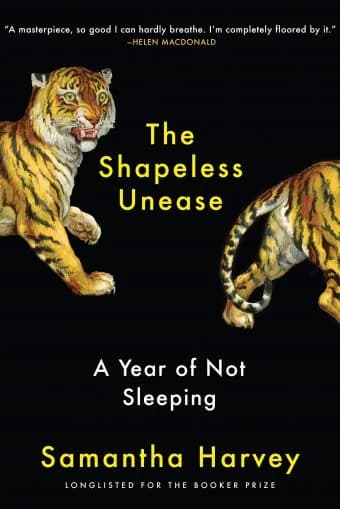
Samantha Harvey
The Shapeless Unease is British author Samantha Harvey's account of insomnia — a record of one year spent completely entangled in sleeplessness. Nights burn bright with wakefulness, days blur with exhaustion; time stretches, memory sharpens, and the whole self feels wedged in the gap between "awake" and "about to fall apart." It is not a "sleep-aid manual." It reads more like an insomniac's memoir crossed with philosophical reflection, piecing together the imagination, fear, anger, grief, and leaping thoughts of sleepless nights into an irregular map. Harvey is a novelist and a creative-writing lecturer at Bath Spa University. Her prose is deeply literary, yet her angle is profoundly human: how do you keep living when you lack something as basic as sleep?
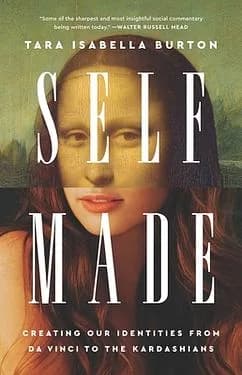
Tara Isabella Burton
We can all recite the slogans of "being yourself": be authentic, be real, don't conform, live your personal brand. But "being yourself is actually a job"—you need positioning, you need to maintain consistent character, you need continuous output, and you need to make sure you don't crash. *The History of Persona: From Da Vinci to the Kardashians* doesn't teach you how to run your Instagram. Instead, it flips the question: why do we believe "self-fashioning" can turn us into our own gods? The author uses a long lens to pull "persona" back into historical context—from Renaissance self-performance all the way to the reality TV and social media era—tracing how "displaying the self" became a basic modern survival skill.
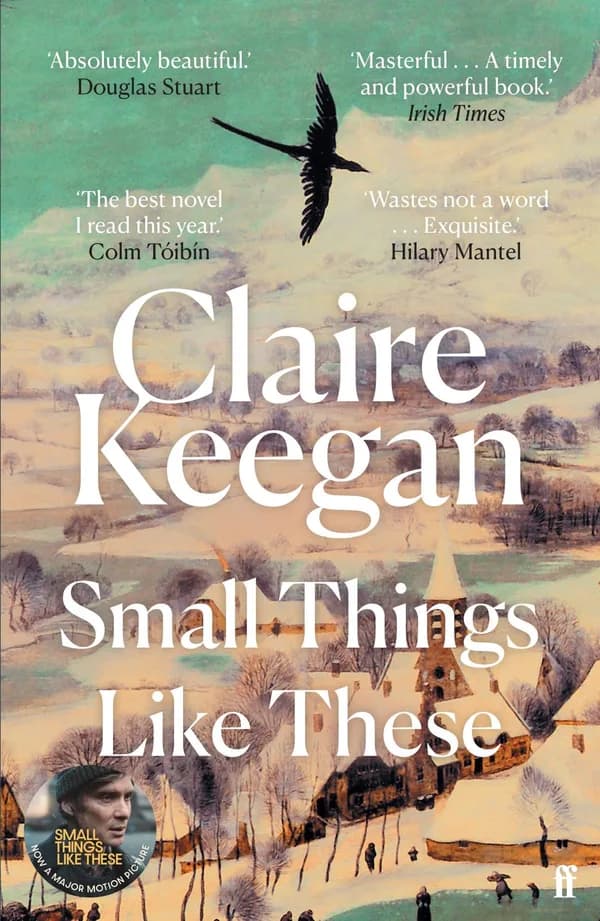
Claire Keegan
Claire Keegan's *Small Things Like These* is short and powerful. Set in an Irish small town just before Christmas 1985, protagonist Bill Furlong is an ordinary coal-and-timber delivery man who accidentally discovers a disheveled, barefoot young woman in a convent laundry, forcing him to choose between conscience and silence. Bill's seemingly insignificant act of kindness becomes the novel's magnifying glass for examining communal complicity and Church power. Keegan's minimalist yet precise language transforms everyday details into moral tension, compelling readers to ask themselves in the silence: what would you do if it were you? The work is regarded as a gentle indictment of collective silence, carrying both warmth and fury. Its taut pacing and weighty themes gained international attention, even leading to a film adaptation and widespread discussion. The aftertaste lingers long. Sometimes the real story doesn't want to be told—"Christmas always brings out the best and worst in people." This book is perfect for savoring slowly during the holiday season.
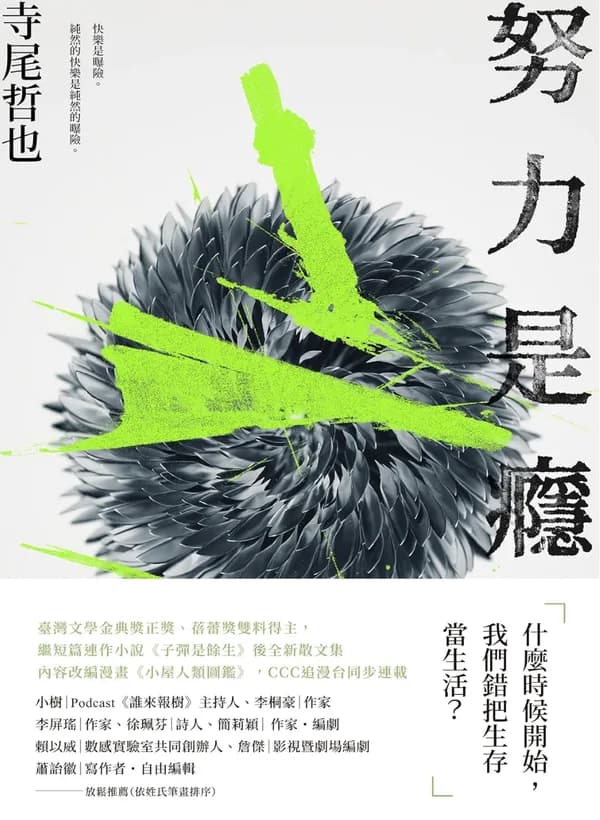
Terao Tetsuya
*Effort Is an Addiction* is the latest essay collection by Tetsuya Terao, a novelist and former Google engineer. Continuing the cold, precise prose and the distinctive "high-pressure feel" of the tech industry from his earlier *Bullets Are the Rest of Life*, this book is his reflection on—and confession about—"effort" as a modern-day religion. Starting from a childhood form where he had to check a box about his family's financial status, he writes his way to the downfall of Silicon Valley geniuses, the world-weariness of elite athletes, and the souls alienated by precision algorithms. This book questions why we treat survival as labor and labor as meaning. Through the struggles of these "straight-A students," it redefines how we relate to fear, loneliness, and the three inner voices telling us "not good enough."
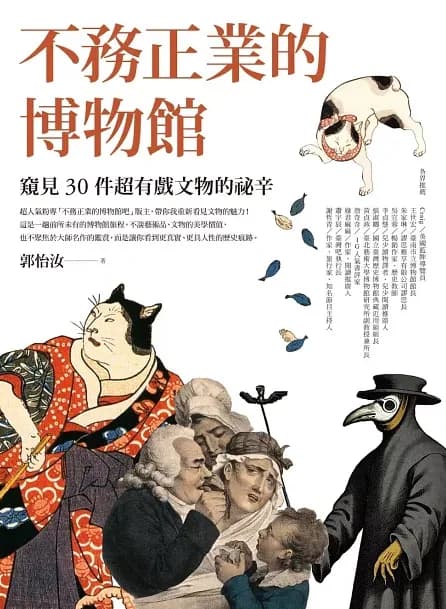
Kuo Yi-Ru
Can you explain "why Greek statues are white" or "why a dog was named 'Loot'"? *The Museum of Unorthodox Pursuits* isn't a serious art textbook but a "trivia encyclopedia" of cultural artifacts. It uncovers the misunderstood truths and forgotten gossip hiding in museums—from how a 19th-century cat-obsessed painter used felines to evade censorship, to the "commercial fraud" behind ancient Egyptian animal mummies. This book doesn't teach you how to appreciate aesthetics; through the bizarre stories behind these "antiques," it redefines our sense of distance from history, transforming cold objects into warm traces of life.
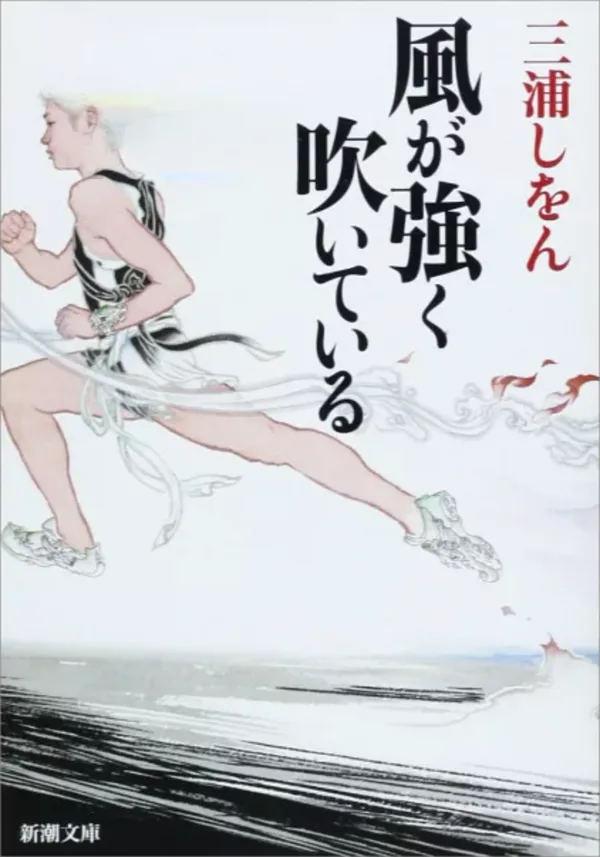
Miura Shion
*Run with the Wind* is Shion Miura's signature work set against the backdrop of the Hakone Ekiden relay marathon. Published in Japanese by Shinchosha in 2006, the story revolves around two college students—Kiyose Haiji and Kurahara Kakeru—and their dilapidated apartment building "Chikusei-sō." Haiji stubbornly cobbles together nine tenants with zero athletic credentials into a ten-person team with one goal: to stand on the starting line of the Hakone Ekiden. If you think this is about "who runs fastest," the book will prove you wrong. There's a line in the synopsis I love: long-distance running isn't about speed—it's about what you carry in your heart. It's about running, but it reads more like a treatise on: how do we give ourselves over to a group of people and trust that "without me it won't work, and without you it won't work either"?
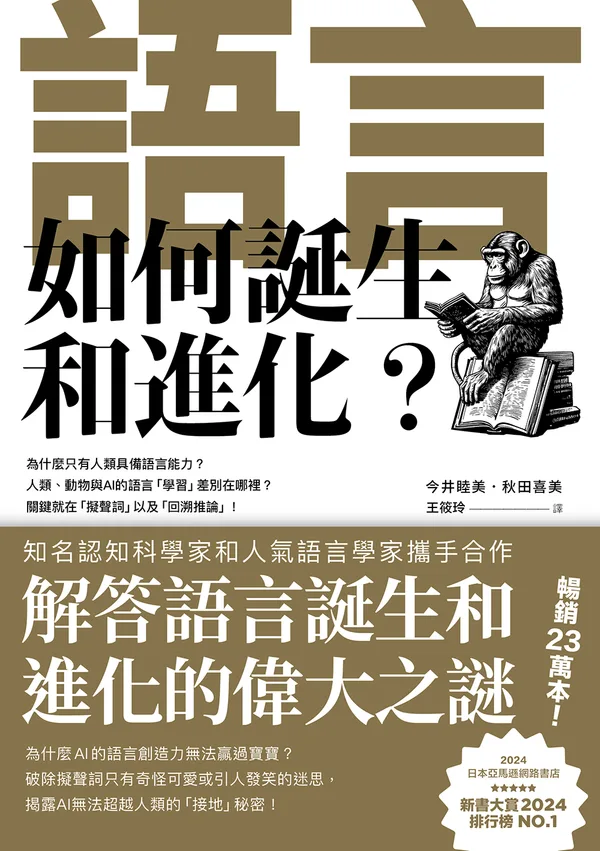
Mutsumi Imai, Kimi Akita
*The Essence of Language: How Language Was Born and Evolved* tackles four enormous questions: Why do only humans have language? How do babies learn to speak from scratch? Where did this massive language system originate? What separates humans from AI and animals? The author's key clue: onomatopoeia and mimetic words (Japanese: *onomatope*). The original Japanese title is *Gengo no Honshitsu: Kotoba wa Dō Umare, Shinka Shita ka* (Chūkō Shinsho, first edition 2023/5/24). The publisher's blurb cuts straight to the point: asking about the essence of language is asking "what is a human being," and the keys to the answer are **onomatopoeia** and the uniquely human capacity for abductive reasoning. This is no niche title in Japan either—it won the "Shinsho Grand Prize 2024" first place and received the "Asian Book Award 2024 Best Book Prize (General Books Division)," among other accolades.

Chen Liang-Yu et al.
*Sustainable Netherlands* is compiled by the "Holland Happening" team, deeply rooted in the country, and presents—across the dimensions of transition, society, and environment—the raw realities of Dutch transformation and challenges. This isn't just a book about environmentalism; it reads more like a diagnostic report on "systemic restructuring": from combating the resource-dependency trap known as "Dutch Disease," to redefining the relationship between consumers and manufacturers through the "circular economy," to honest self-examination of gender diversity and the predicaments of working women. The book's structure extends from the micro level of workplace culture all the way to the macro level of global trade history. It shows us the gray area of cannabis policy, the history of the Red Light District, and the rarely reported sports culture ingrained in Dutch DNA. It redefines what you might consider "added-value" sustainability as a systemic transformation requiring structural surgery—even changing the very DNA of consumption.

Chou Hsueh-Fang
*A History of Russia: The Enigmatic Nation* (Sanmin Books, 5th revised edition) is a general history of Russia written by Zhou Xuefang in a style attuned to Taiwanese readers. Starting from Kievan Rus in 862, it traces forward to the late 20th century, with the new edition adding analytical essays and afterwords on the Putin era and the Russia-Ukraine war—making it not just "ancient history" but a resource for understanding the deep causes behind contemporary controversies. Zhou Xuefang is a retired professor from the Department of History at Fu Jen Catholic University, a long-time specialist in Russian history, whose writing is clear, smooth, and accessible, while preserving sufficient historical complexity.
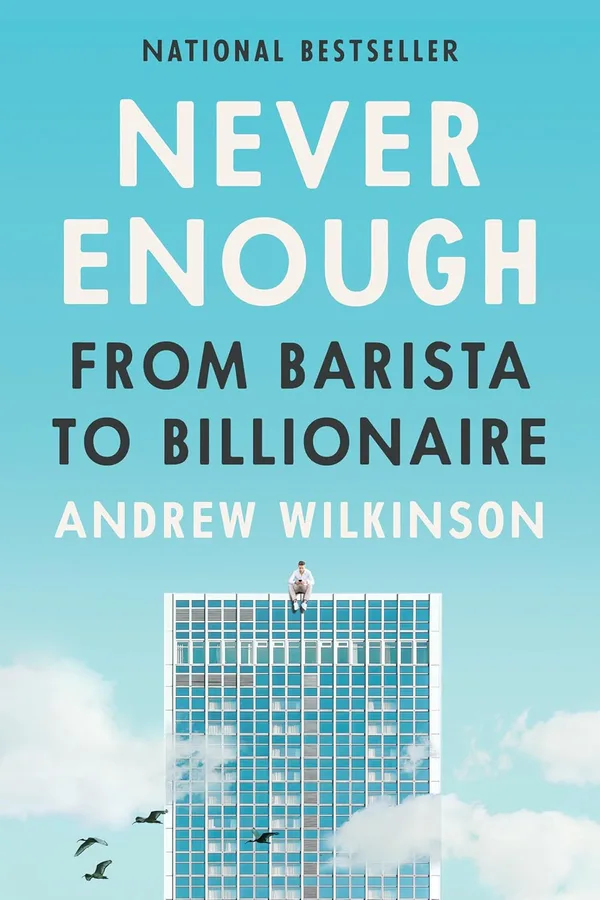
Andrew Wilkinson
You can name a hundred reasons for "wanting to get rich": buying a supercar, living in a mansion, achieving financial freedom, making everyone who once looked down on you eat their words. But can you explain where that bottomless emptiness and anxiety come from "after you actually have a hundred million dollars"? *Never Enough: From Barista to Billionaire* is the autobiographical confession of tech legend and MetaLab founder Andrew Wilkinson. He launched his business at 25, was worth over $100 million by 37, with clients including YouTube, Slack, and Shopify, and even earned the admiration of Warren Buffett's partner Charlie Munger. But his journey from barista to billionaire wasn't all glamorous acquisitions—far more of it was about childhood deprivation, the gamble of "fake it till you make it," and a reorientation of life's meaning after a conversation with Buffett. The book's structure reads like an "anatomy class of money psychology," from the pressure of the wealth gap experienced in a school district to the personal threats and loneliness that come with fame. This isn't just about how to get rich—it redefines what you thought was the "finish line" of wealth as a "demon" that needs to be mastered, and even reconciled with.
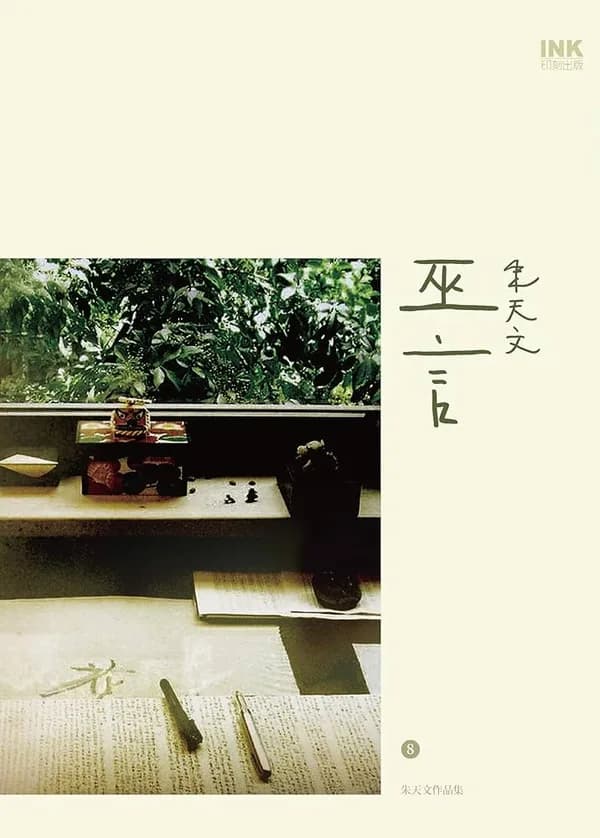
Chu Tien-wen
It took Chu T'ien-wen thirteen years to write this book. After *Notes of a Desolate Man* (荒人手記) in 1994, she fell almost silent for an entire generation, then in 2008 delivered *Witch's Brew* (巫言) — a novel that does not behave like a novel, a story that has no intention of telling a proper story. The "witch" (巫) is the book's central metaphor. The narrator is a female writer who is not so much living through a plot as *observing*: observing the everyday life of Taipei, the frenzy of elections, the textures of consumer society, and the subtle power dynamics between people. She is like a shaman, casting spells with language, weaving every fragment she sees into a dense, ornate, almost suffocating river of prose. There is no conventional storyline, no rising action or resolution, not even clear character development. It reads more like a prolonged drift of consciousness, fusing fiction, essay, cultural criticism, and private notebook into one. Reading it requires patience, but once you accept its rhythm, you realise Chu is doing something genuinely radical: she is asking whether, in a world that keeps accelerating and demanding efficiency and instant response, a writer can still use the slowest possible method to record the texture of an era, inch by inch. *Witch's Brew* won the Jury Award at the 2nd Hong Kong Baptist University Red Mansion Prize (紅樓夢獎).
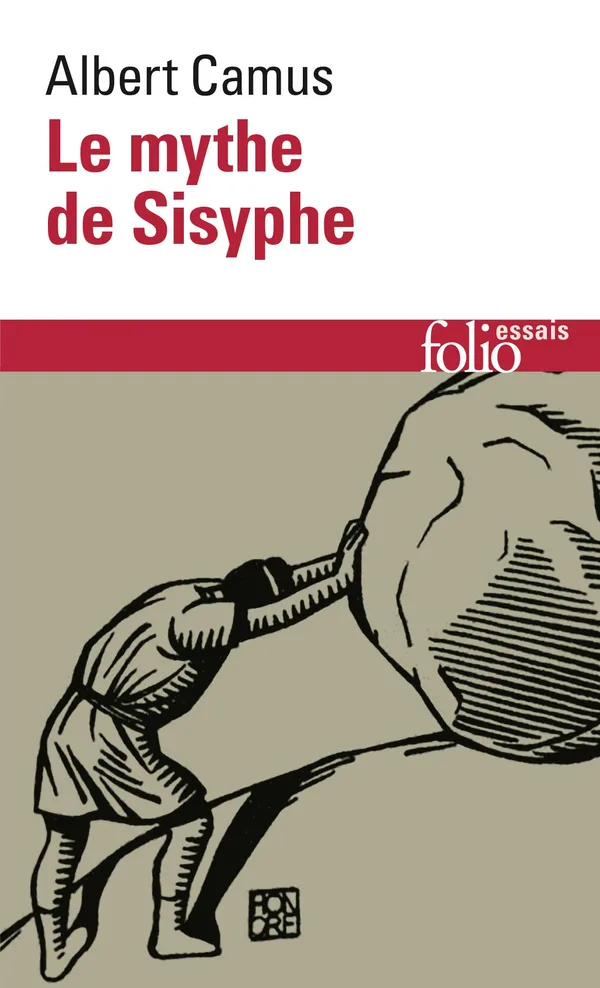
Albert Camus
You can name a hundred reasons why "philosophy matters": time, existence, freedom, morality, love. But Camus kicks off by flipping the table entirely: philosophy's most important question is actually—should you go on living? *The Myth of Sisyphus* (*Le Mythe de Sisyphe*) is a philosophical essay published by Albert Camus in 1942, the same year as *The Stranger*, and stands as the main stage for his "philosophy of the absurd": the world is silent, humans crave meaning, and the awkward gap where the two collide—that's the absurd. Camus doesn't sell chicken soup, nor does he offer "the ultimate answer to life." He does only one ruthless thing: forces you to look directly at "meaninglessness," then asks—are you going to run, or stay awake and remain?
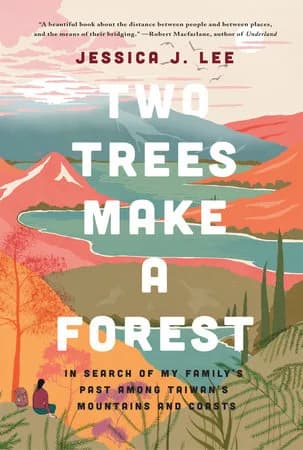
Jessica J. Lee
*Two Trees Make a Forest* is written by Jessica J. Lee, a Canadian-Taiwanese environmental historian. The story begins with a letter found among her grandmother's belongings, handwritten by her grandfather in Chinese. For Lee, whose Chinese ability is limited, this letter was like a "family instruction manual" whose password had been lost. To crack this mystery spanning borders and languages, she traveled from Canada back to her mother's homeland—Taiwan—attempting to piece together the historical fragments hidden behind her family's silence among earthquake fault lines, subtropical rainforests, and towering mountain ranges. The book's structure reads like a "dual archaeology of geology and genetics": she weaves together plant taxonomy, terrain evolution, cross-strait migration, and identity formation. If you treat it as a simple travel book, you'll miss its depth—it redefines what you might consider a "ruptured" personal identity as a profound dialogue with land, language, and memory.
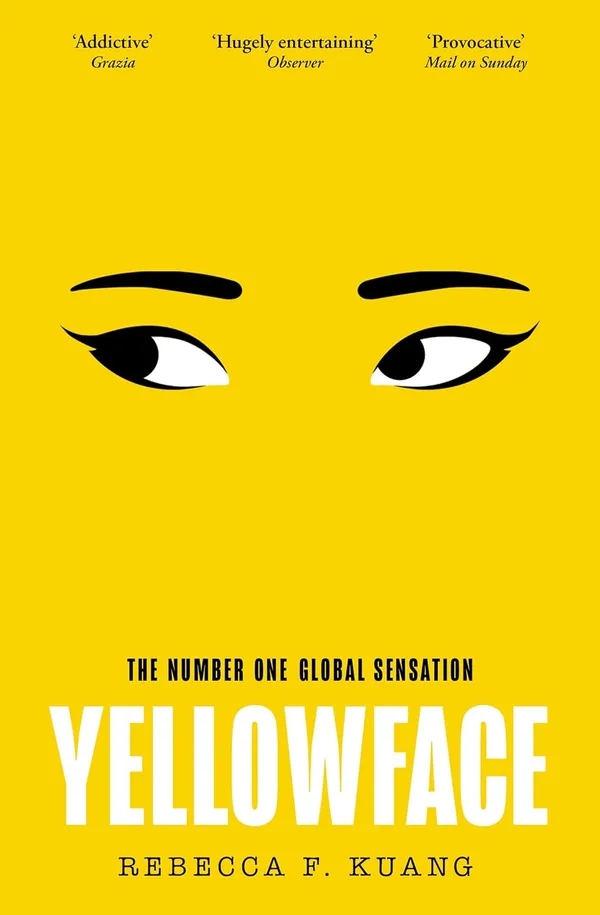
R.F. Kuang
*Yellowface* by R. F. Kuang starts from the most directly unethical and illegal premise—plagiarizing a manuscript—and drags you headfirst into an even more sensitive and harder-to-articulate battlefield: cultural appropriation, identity politics, and how the publishing industry turns authors into commodities. The protagonist, June, is a mediocre white author whose work nobody reads. When her friend Athena—a rising Chinese American literary star—dies in a freak accident, June steals her unfinished manuscript, rewrites it, repackages it, and publishes it. Propelled by market forces and social media, the story spirals into a dark comedy of "impersonating an Asian author."
Gabrielle Zevin
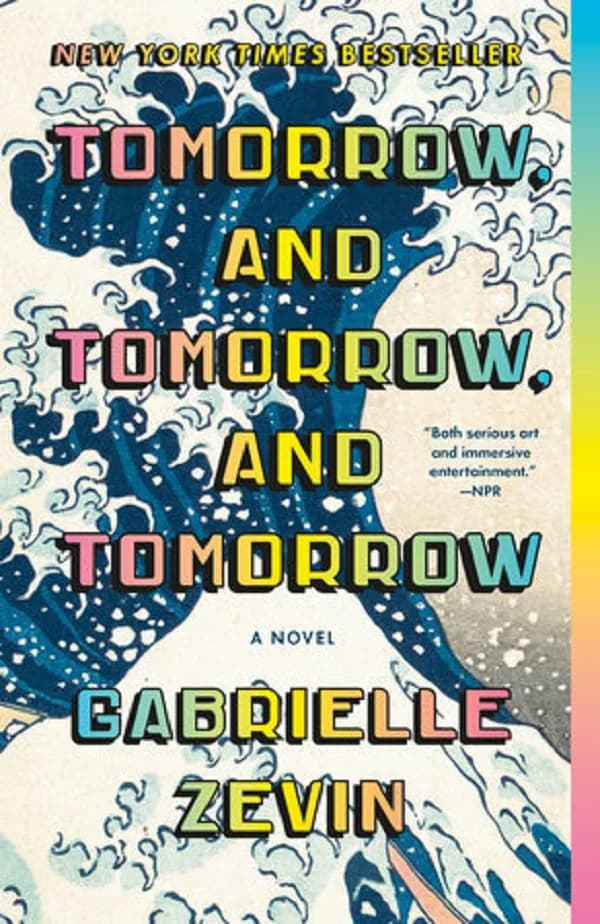
*Tomorrow, and Tomorrow, and Tomorrow* is the magnum opus of American author Gabrielle Zevin. The story follows two video game prodigies, Sam and Sadie, from their first meeting in a Boston children's hospital to co-developing a world-shaking game, spanning thirty years of emotional entanglement. This is not merely an industry drama about game development—it's a profound exploration of disability, identity, and how two lonely souls find redemption through "creation." The book's structure resembles the level design of a grand video game, transforming the most pessimistic line from Shakespeare's *Macbeth* into the gaming logic of "infinite lives." Though the title is drawn from tragedy, it conceals an entirely different life energy. This book redefines what you may have dismissed as "wasting time" on games, recasting them as the highest art form capable of mending reality's shortcomings and conveying complex emotions.
Rahul Jandial
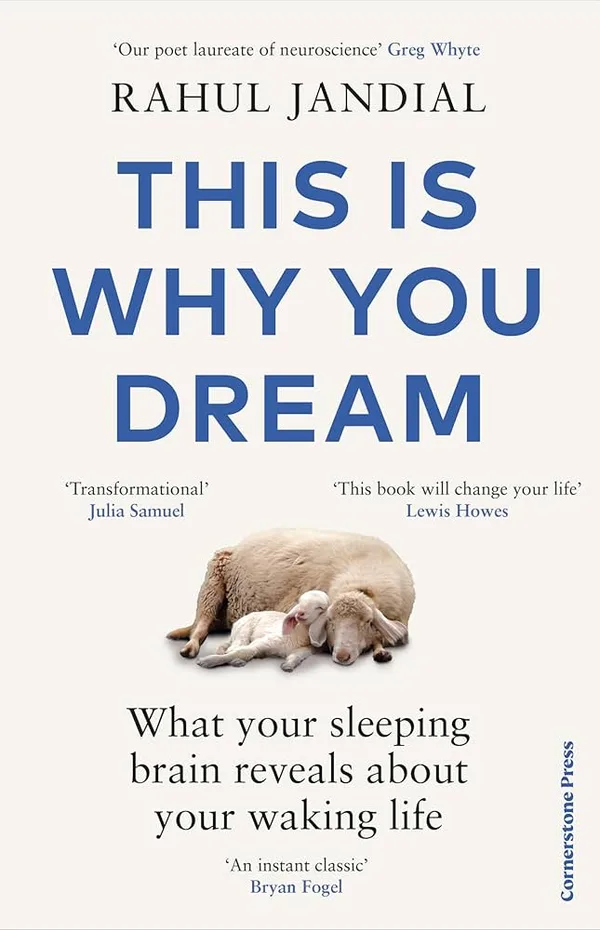
You can name a hundred reasons why "dreams are mystical": omens, the subconscious, ancestral spirits, past lives, precognition. But can you offer a more scientific—and far less romantic—answer: dreams are actually your brain's electricity working overtime. *This Is Why You Dream* is written by neurosurgeon and neuroscientist Rahul Jandial. Using clinical observations and recent sleep research, he pulls dreaming out of the realm of "mysticism" and back into the "in-brain movie production studio": how dreams participate in emotional processing, memory and learning, creative connections, and may even serve as clues to certain health changes. What makes this book enjoyable is that it doesn't rely on scare tactics or data dumps; instead, it uses stories to draw you into the strangest contrast of all—telling you that while you're asleep, your brain is actually incredibly busy.
Uri Gneezy
You can name a hundred reasons for "motivating others": give bonuses, offer promotions, set rules, impose fines. But can you explain why your carefully designed incentives so often backfire, sometimes making things even worse? *Mixed Signals: How Incentives Really Work* is written by behavioral economics master Uri Gneezy. He argues that the core reason incentives fail is that we send "Mixed Signals." When we try to guide the behavior of employees or children, the incentives we offer often convey a secondary message that contradicts our original intent. This book isn't merely a business management guide—it's a hands-on exercise in behavioral psychology and game theory. The book is structured like a "motivation laboratory": from the famous daycare-center late-pickup fine experiment to the psychology of compensation in charitable fundraising. It isn't just about economic profit; what it truly aims to do is: **redefine how we reach "behavioral consensus" with others by eliminating "mixed signals," and precisely use incentives to solve problems.**
David Macey
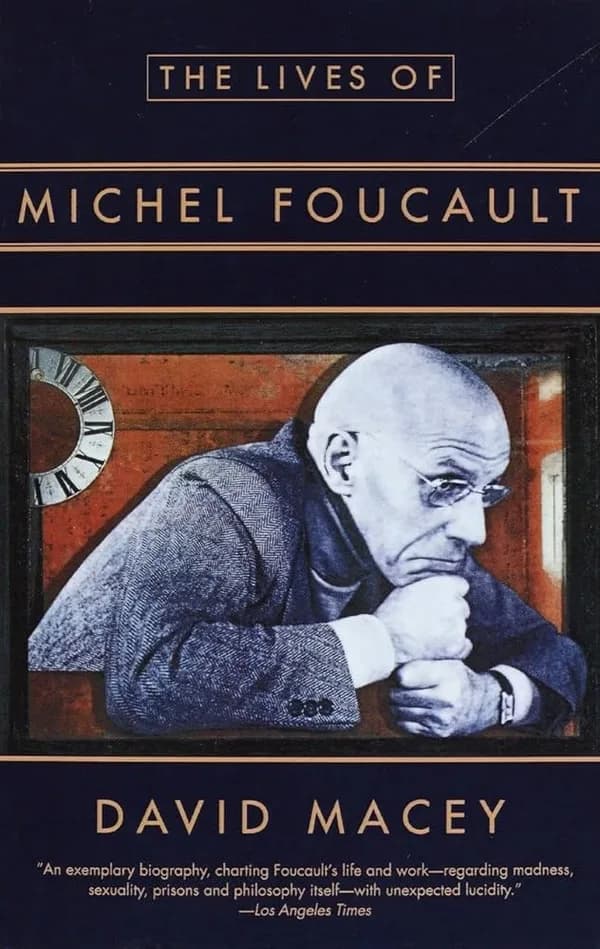
*The Lives of Michel Foucault* presents readers with a three-dimensional, multifaceted portrait of Foucault through extensive archival research and interviews. Written by David Macey, this biography delves deeply into Foucault's life and the impact of his thought on the social sciences, while also exploring his complex personal life, emotional relationships, and his positioning within the currents of his era. The book is not merely an academic biography but a captivating intellectual journey that allows readers to gain a comprehensive understanding of this profoundly influential philosopher. Moreover, the book examines Foucault not only from an academic perspective but from personal and social angles as well, presenting many little-known details through extensive documentation and interviews. Macey's writing style is accessible and approachable, making it especially suitable for readers without a French academic background. The new edition features a special essay by Foucault expert Stuart Elden, incorporating thirty years of new research to give the biography even greater authority. Foucault's remarkable life and lasting influence continue to fascinate, making this book an essential resource for understanding his thought and experiences. It is recommended for admirers of Foucault's philosophy, readers interested in philosophical biography, or anyone seeking to deepen their knowledge of 20th-century intellectual history—this book will guide you into Foucault's inner world and help you rediscover this great thinker.
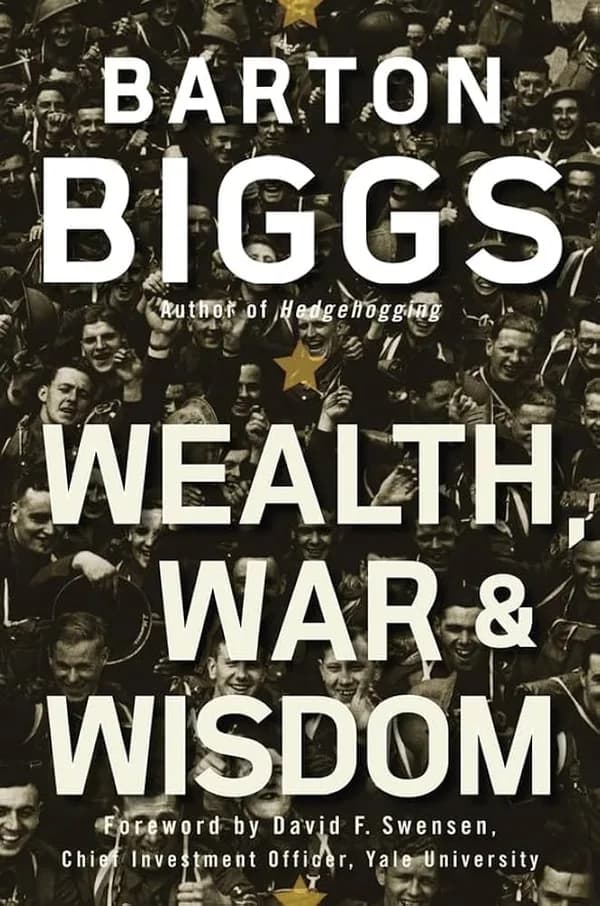
Barton Biggs
*Wealth, War & Wisdom* is written by legendary investor and former Morgan Stanley chief strategist Barton Biggs. This is no dry history book—it's a wartime field manual approached from the angle of "asset preservation." By analyzing stock market movements in the US, UK, Germany, Japan, and other nations during WWII, Biggs demonstrates that financial markets not only reflect current economics but also serve as an "early warning system" for major historical turning points. The book is structured like a cross-border "wealth survival experiment": from the eerie rally of the London stock exchange during the Battle of Britain, to the frantic flight of French capital when Germany invaded Paris, to the mania preceding Japan's bubble burst. Through market behavior under extreme wartime conditions, it redefines investor "wisdom"—in such uncertain times, protecting wealth requires not prediction, but a deep understanding of human nature and historical patterns.
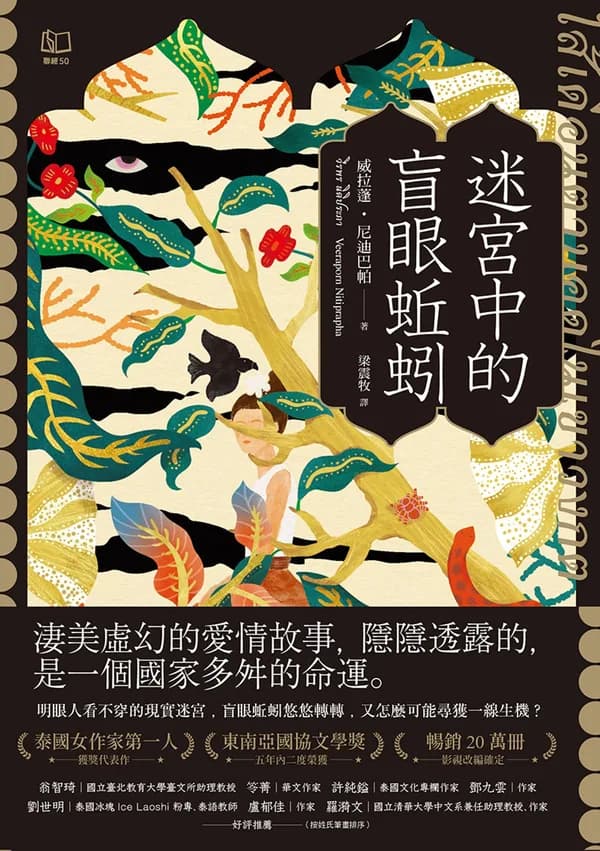
Veeraporn Nitiprabha
You can name a hundred reasons why "Thai soap operas are absurdly dramatic": scumbag men everywhere, tragic love-suicide plotlines, all manner of outlandish coincidences and fantastical elements. But can you articulate the political truths hidden behind these seemingly ludicrous storylines—truths that must be told "the long way around" because direct speech is restricted? *The Blind Earthworm in the Labyrinth* is an award-winning masterpiece by Veeraporn Nitiprapha, a major contemporary Thai author. Through elegant, lyrical, and even aestheticized prose, she paints fated moments that feel like folk songs and myths. On the surface, the story is a high-tension romantic entanglement, but it precisely maps onto the real upheavals of Thai society. Veeraporn uses magical realist techniques to transform nearly a century of Thailand's spiritual turbulence into a "paper labyrinth," leading readers step by step—through the illusion of romance—into the depths of historical and political dislocation.
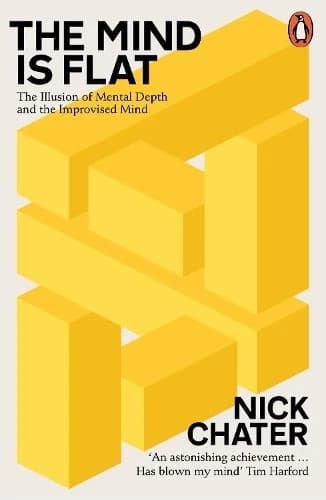
Nick Chater
*The Mind is Flat* is written by Nick Chater, a Fellow of the British Academy. Combining neuroscience, behavioral psychology, and perceptual psychology, he boldly proposes that the human mind is shallow. We've always assumed there are deep motivations behind our behavior, but through extensive experiments, Chater demonstrates that the brain is actually a "master of deceptive improvisation"—capturing fragmented information in the moment and instantly weaving together logical-sounding explanations based on past experience.
Liu Cixin
*The Three-Body Problem* is the first installment of Liu Cixin's "Remembrance of Earth's Past" trilogy. Beginning with the trauma of the Cultural Revolution, elite scientist Ye Wenjie, working within a secret military project, sends a signal into the depths of the universe, opening the possibility of "receiving a reply" for humanity. Decades later, nanomaterials researcher Wang Miao is drawn into a mystery involving a string of scientist suicides and the "Frontiers of Science" organization. A virtual reality game called "Three Body" transforms the famous physics "three-body problem" into a civilization-level allegory: in a chaotic world with three suns, how do you survive? And how do you find meaning in being alive?
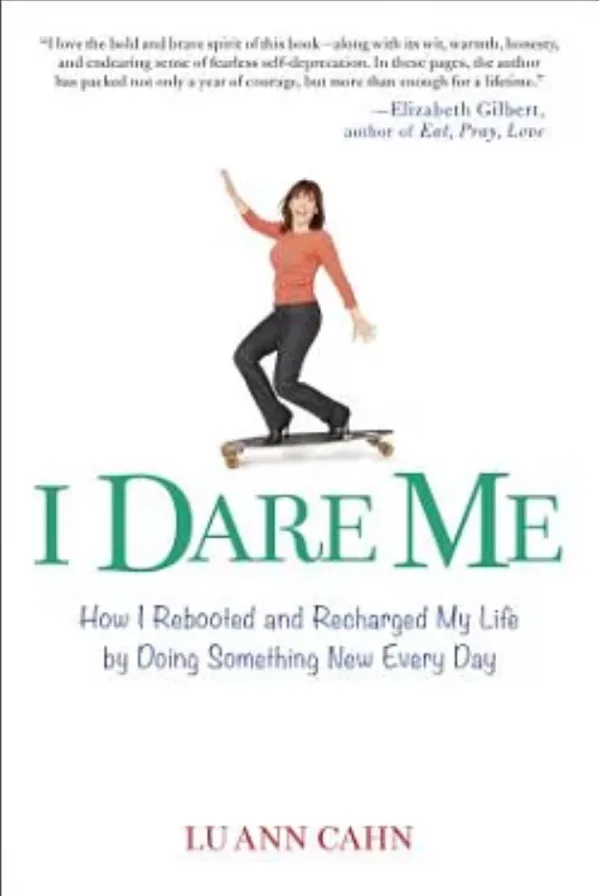
Lu Ann Cahn
*I Dare Me* chronicles veteran American journalist Lu Ann Cahn's life-changing project. After recovering from serious illness, stalling in her career, and sinking into emotional malaise, she took her daughter's advice and launched her "first experience project." From the seemingly crazy "Polar Bear Plunge" to joining a crowd for a jam session and crossing a bridge in high heels in the snow, she spent an entire year forcefully pushing herself from the familiar into the unknown. The book's structure is more than an adventure journal—it's a journey of self-healing centered on "behavioral conditioning." It shows readers how outward experiments (like skiing or chatting with strangers) can, in turn, reshape inner cognition.
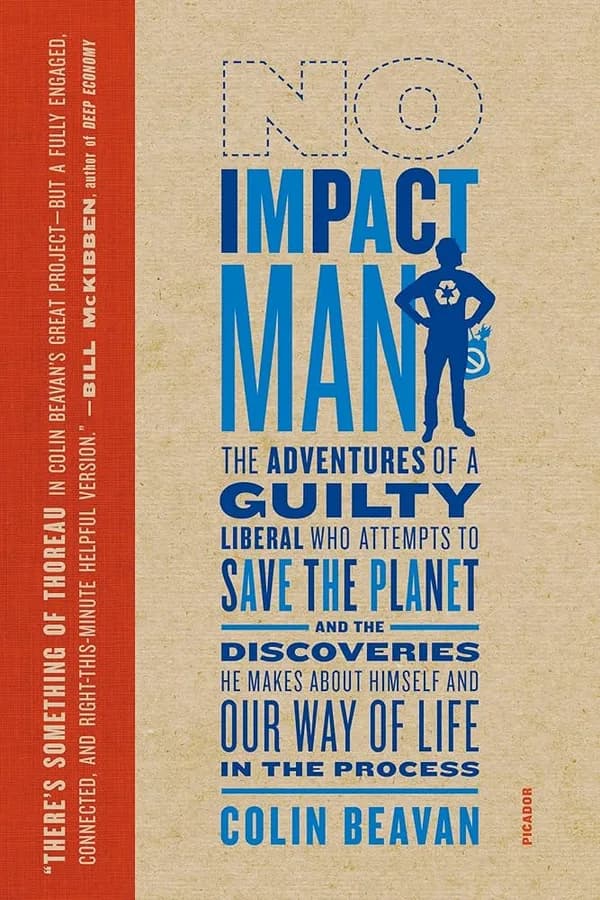
Colin Beavan
*No Impact Man* isn't about "you should try harder to save the planet." It's about an ordinary middle-aged man living in New York, **Colin Beavan**, who suddenly decides to bring his wife, their one-year-old diaper-wearing daughter, and a dog along for a full year of "No Impact" living: no producing trash, no toilet paper, no elevators, no TV, no cars—even attempting to live without conventional electricity and switching to lower-impact alternatives. The most ironic part is the result: his health improved, his marriage gained breathing room, and life actually felt more like *living*. Instead of guilt-tripping you with alarming statistics, the book uses a series of awkward yet hilarious everyday moments to help you see that "going green" might not mean more suffering, but rather more clarity.
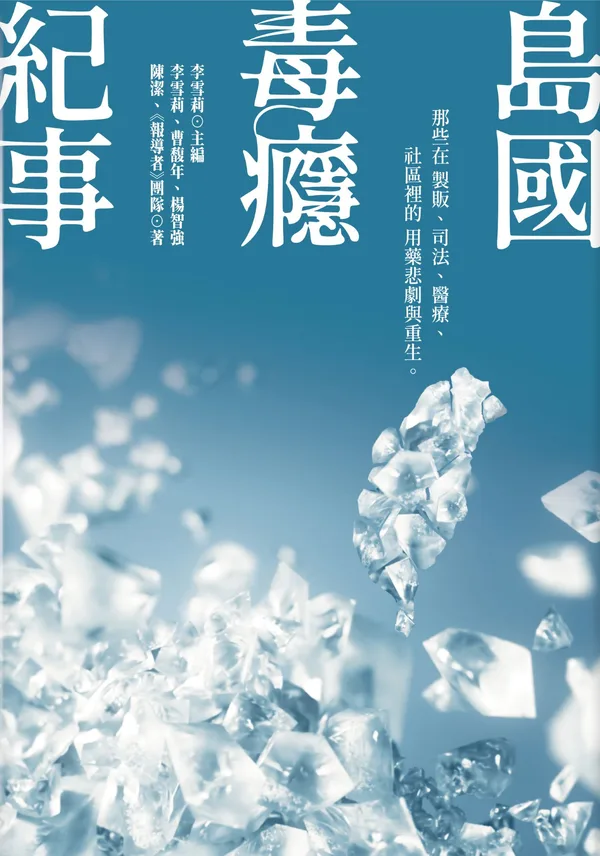
The Reporter Team
*Island Nation Addiction Chronicles* is a deep-dive investigation by *The Reporter*'s team of journalists, spanning six years of fieldwork. They discovered that the starting point for contemporary addicts is often not pleasure-seeking but the "pain" of escaping reality. The book shatters the stereotype that drugs are confined to society's margins, exposing how addiction cuts across blue-collar and white-collar strata and how novel substances like nitrous oxide ("laughing gas") and e-cigarettes are infiltrating campuses. The structure reads like a "field survey of the island's dark corners": from the supply chain of "C balloons" delivered within 24 hours, to the e-cigarette wholesale empire run by a middle-schooler on Instagram. It reframes what we assume to be a "weak willpower" crime problem into a structural crisis involving public health, law, and psychosocial support.
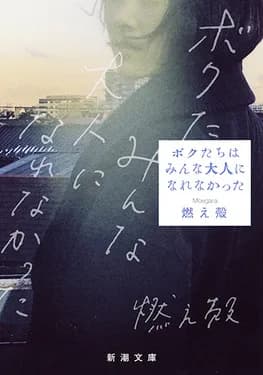
Moegara
*We Couldn't Become Adults* (Japanese: 《ボクたちはみんな大人になれなかった》) is by the Japanese writer Moegara. It was first serialised online, published in book form in 2017, and released in Traditional Chinese in September 2019. The trigger is modern and cruel: on a crowded train, the forty-something narrator sends a Facebook friend request to someone he once deeply loved, then memory rewinds all the way back to 1990s Shibuya and the tail end of youth. It is not a fiery coming-of-age story, nor is it chicken-soup inspirational — it is a "City Pop-style" narrative: the melody is catchy, the lighting is lovely, but every line conceals regret. The work was later adapted into the Netflix film *We Couldn't Become Adults* (2021), using the same structure of "one friend request pulls a person back into the past."
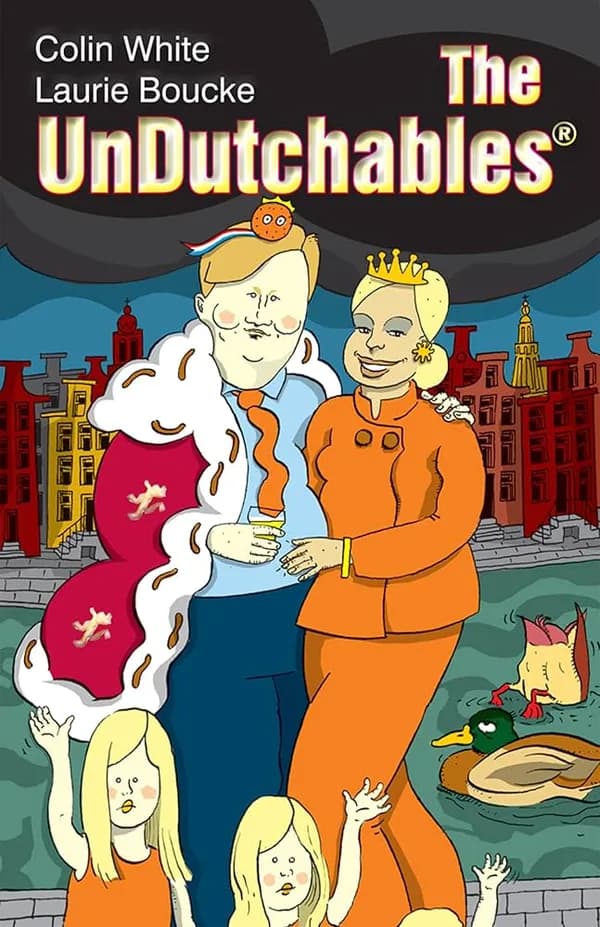
Laurie Boucke, Colin White
*The UnDutchables* is a cultural classic that has been in print for over twenty years and reprinted six times. The author presents the Dutch in unsparing detail: their remarkable ability to "complain loudly" turns out to be the engine that drives social progress. Beyond dismantling stereotypes of wooden shoes and canals, the book delves into how the Dutch, beneath a seemingly leisurely work pace, have built a welfare system the world envies — one where citizens need not worry about basic needs. The book is structured like a quirky census of "Dutch fun facts": from the world's tallest average height, to more bicycles than people, to the perennially controversial "Black Pete" festival. It is not merely a travel guide but a tool for understanding the Dutch from a deeper angle.
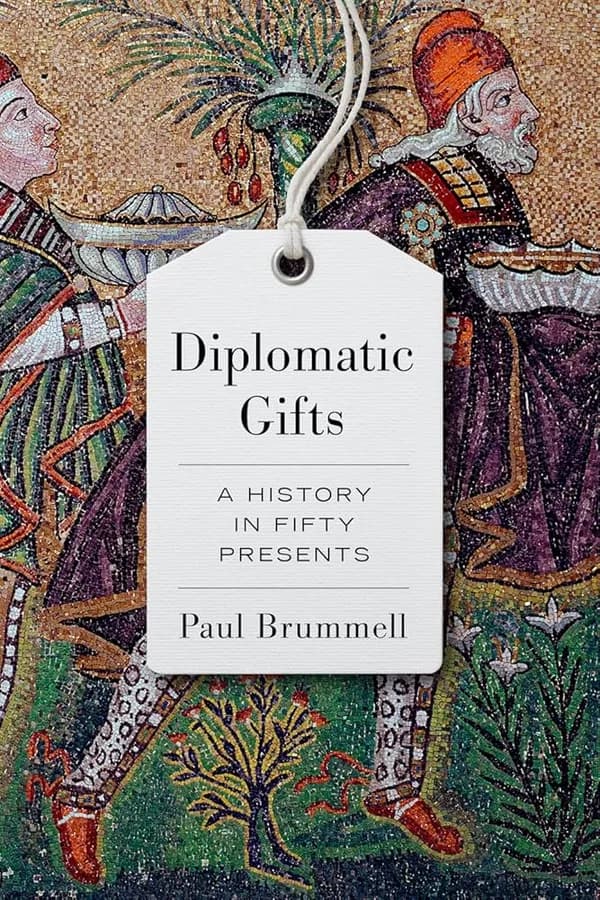
Paul Brummell
*The Art of Gift-Giving* is written by a British diplomat with a gift for storytelling. This is not an etiquette manual but a "history of gifts" that dissects international politics. From ancient wars launched to obtain horses, to the modern global craze of "panda leasing," the author reveals that a gift's true value often lies not in its price tag but in the layers of geopolitical metaphor beneath the wrapping. The book shows us Emperor Wu of Han bloodying the kingdom of Dayuan for the "ancient Bugatti" — the Ferghana horse — and reveals the suppressed "Egyptian peasant woman" prequel behind the Statue of Liberty. By analysing these absurd and extraordinary gifts, it redefines how we look at world history.
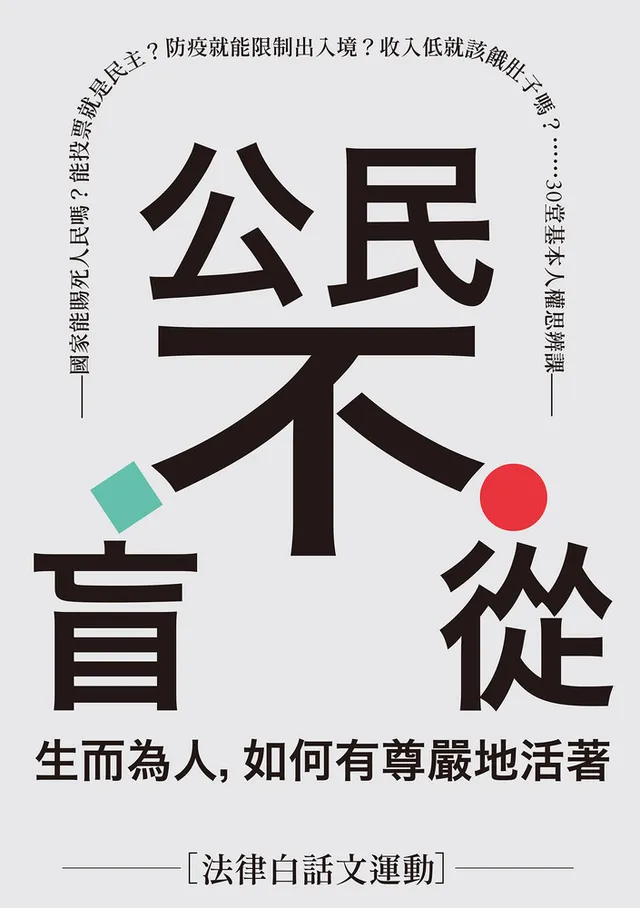
Plain Law Movement
*Citizens Who Don't Follow Blindly: Born Human, How to Live with Dignity — Can a State Execute Its People? Does Having Elections Mean Democracy? Can Pandemic Control Restrict Border Crossings? Should Low Income Mean Going Hungry? … 30 Lessons in Fundamental Human-Rights Thinking* is an "owner's manual" for the civilised world. Using the United Nations' simplified thirty-article version of the *Universal Declaration of Human Rights* as its skeleton, it explains — article by article — what each provision truly seeks to protect, and uses extensive domestic and international cases to translate cold legal text into realities you and I encounter every day.
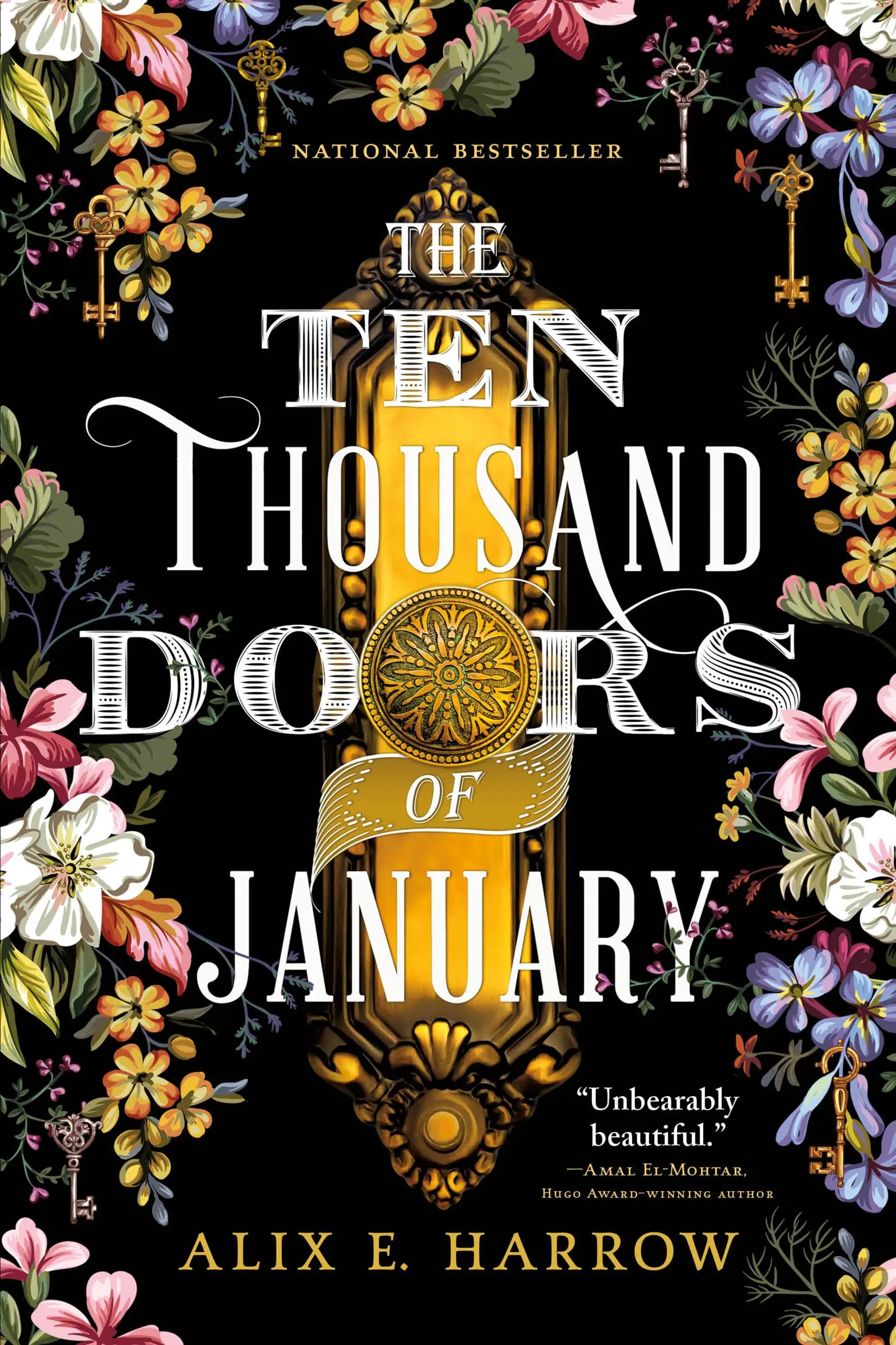
Alix E. Harrow
*The Ten Thousand Doors of January* is Alix E. Harrow's stunning debut novel. Before becoming a full-time writer, she was an academic historian specialising in African American history. That deep historical foundation lends the book a distinctive chapter structure — it mimics academic papers, using the tone of a researcher analysing source material and blurring the boundary between real and fictional. The story takes place in early 20th-century America, where a girl named January, with an unusual skin colour, grows up in Locke Manor. She is treated as the mansion's curator's prized curiosity, but when she stumbles upon a mysterious book about "Doors," she embarks on a journey across class, race, and time in search of her roots. The book's structure is a "story about stories" — it does not merely describe adventures across worlds; it asks **who holds the power to define reality**.
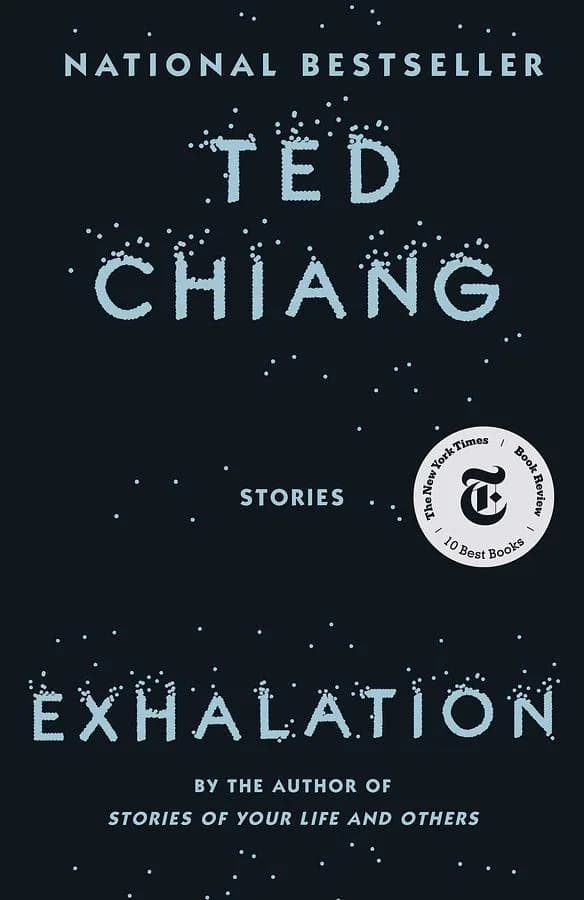
Ted Chiang
*Exhalation* is the long-awaited short-story collection from Ted Chiang, widely regarded as a "deity" in global science fiction. In three decades he has produced remarkably little, yet every story is legendary. His earlier *Stories of Your Life and Others* was adapted into the film *Arrival*, and *Exhalation* goes even further — earning a strong recommendation from Barack Obama as "the cream of science fiction." Drawing on physics, biology, and computational science, Chiang writes deeply felt dialogues about the soul, responsibility, and choice. The book's structure is like a "thought-experiment marathon": from an alchemical gate that lets you return to the past but never change the outcome, to a communication device that connects you with a parallel universe, to the rights and evolution of artificial intelligence. What Chiang truly wants to do is redefine the meaning of "hope" and "character" within the cold constraints of physical law.
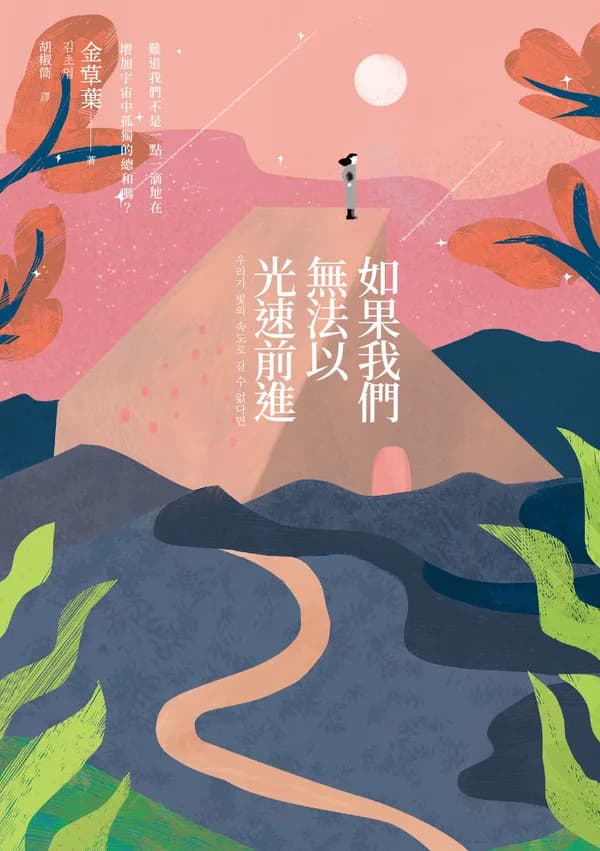
Kim Cho-yeop
*If We Cannot Travel at the Speed of Light* is a short-story collection by Kim Cho-yeop, a rising Korean science-fiction writer. Its seven stories appear to be about space, alien life, mind-uploading, cryogenic freezing, and cosmic pioneering, but underneath they are all writing about the same thing: we want to be understood. Many readers call it "warm sci-fi" — not because the world is gentle, but because the author places tenderness in humanity's most vulnerable moments. Kim Cho-yeop (born 1993) comes from a science-and-engineering background, having studied at POSTECH. She gained recognition in Korean science-literature awards with "Lost in the Museum" and the title story, and the collection sparked wide discussion upon publication in Korea.

Chen Yung-Yi
*About Feelings* is written by Chen Yung-yi, a clinical psychologist licensed in both Taiwan and the United States. She has taught at several top universities and hosts the podcast *Psychology — No Study Required*, which deconstructs psychology in accessible language. *About Feelings: Five Roles, Meeting a Psychologist While Learning About Love* is not about pink bubbles — it is about *relationship*: lover, self, spouse, parent–child, family member — five roles you will inevitably play. Its format is unconventional, more like a "serial drama" set in a therapist's office. Monday through Friday, each day brings one case, one dialogue, and one stretch of the therapist's internal reasoning and self-questioning, letting you follow your own blind spots the way you would binge a TV series.
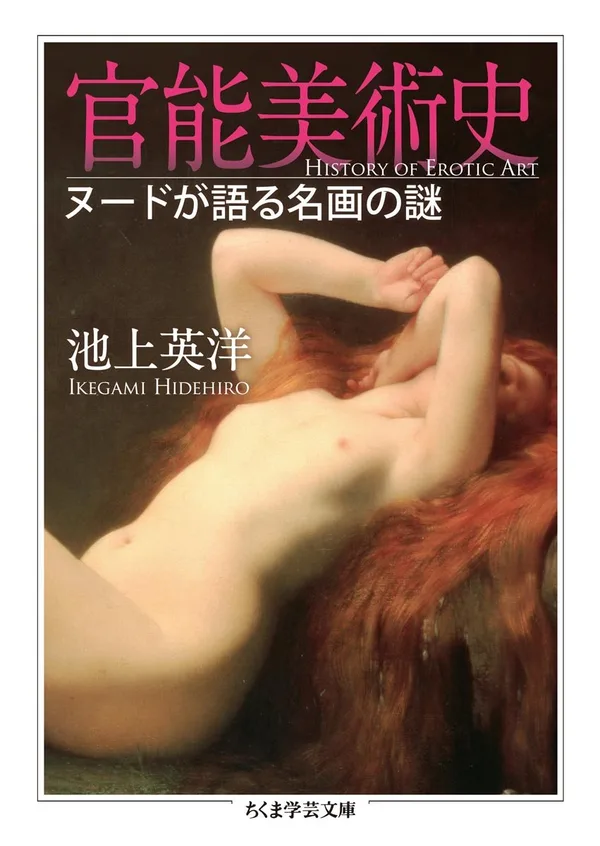
Ikegami Hidehiro
You can name a hundred reasons why "art should be lofty and pure" — to refine temperament, to manifest the divine, to pursue proportion, to hang in the Louvre. But can you explain "why sex and beauty are inseparable"? *An Erotic History of Art* is a dissection of human desire, love–hate, and social taboo through Western art history. Since the dawn of civilisation, "love" and "death" have been humanity's two great obsessions. Painters never shied away from these subjects — and often hid daring allusions behind masterpieces. Rembrandt, beyond *The Night Watch*, painted countless works alluding to intercourse; Da Vinci recorded the physiology of sex in his anatomical drawings; and the Realist master Courbet broke new ground on canvas with erotic and lesbian subjects. The book is structured like a guided tour from altar to bedchamber: from ancient Greece's open worship of the body, through the "desire-yet-dare-not-speak" repression of the medieval Church, to how modern artists mounted tiny rebellions under Inquisition and censorship. Author Ikegami Hidehiro uses a wealth of images (analysing around 200 famous paintings) to track how nudity, desire, symbols, mythology, and biblical themes were painted onto canvas — and explains how "taboo" in turn stimulated creation, with equal parts gossip and rigour.
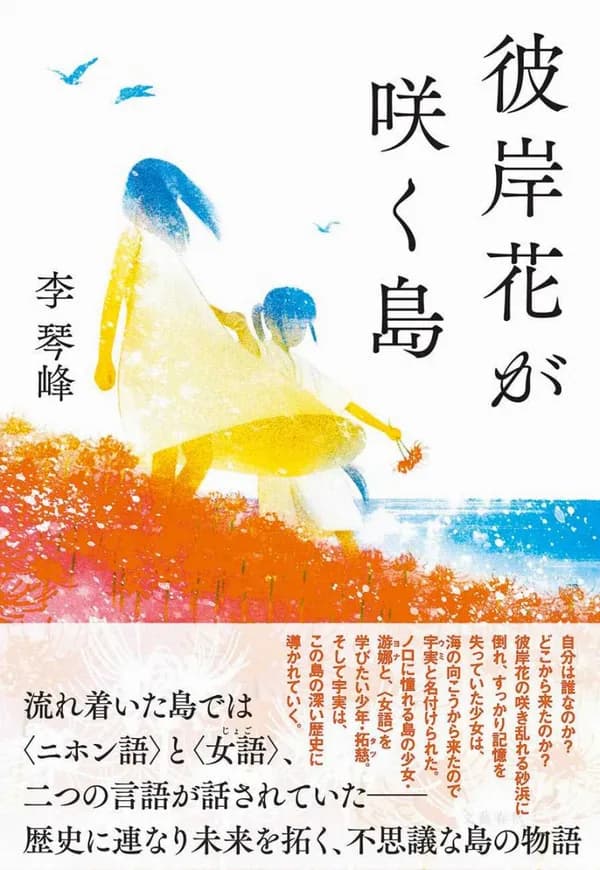
Li Kotomi
You can name a hundred reasons why "history is written by men" — for war, for power, for defining orthodoxy. But have you ever imagined what the world would look like if history were built on "women's logic" and an "exclusive language"? *The Island Where the Spider Lilies Bloom* (彼岸花盛開之島) is Li Kotomi's crowning achievement, winner of the 165th Akutagawa Prize. As the first Taiwanese writer to receive the award, she writes in Japanese — not her mother tongue — giving her a more detached and perceptive vantage point for "language experiments." The story is set on an island where spider lilies bloom year-round. A girl named Umi drifts ashore; to become an islander she must learn "Jogo" (the women's language), mastered only by women, and become "Noro," a priestess charged with carrying history. Meanwhile, a boy her age named Takuji secretly studies Jogo, because he cannot understand why "learning a language" should be a gender-restricted zone. The structure blends Western "utopia" with Eastern "Peach Blossom Spring" imagery and folds in legends from the Ryukyu Islands and Yonaguni. This is not merely a fantasy fable; it is a bold social experiment incorporating critiques of pandemic, war, and xenophobia. By imagining an island ruled by women under a political system entirely unlike our own, it redefines the historical perspective we take for granted.
Lu Sheng-Yan
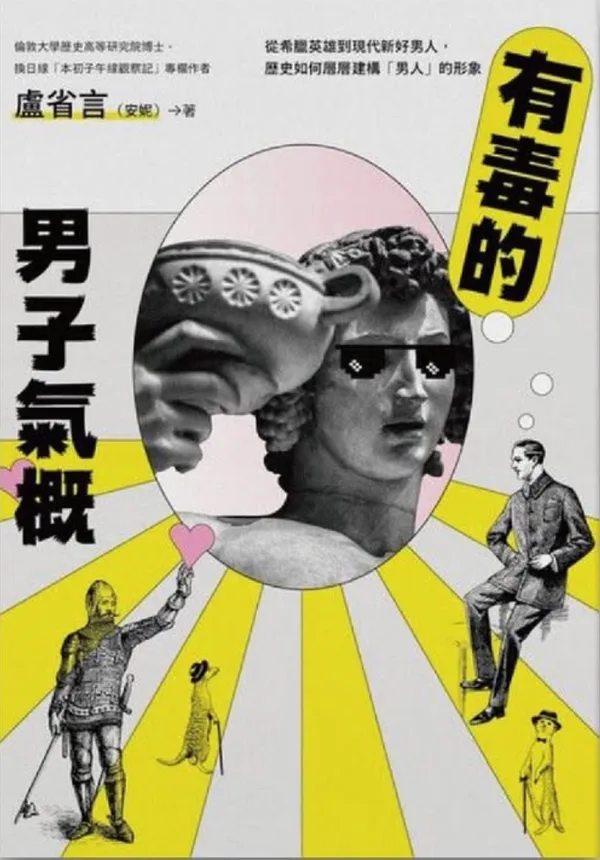
You can name a hundred reasons why "it's great to be a man" — political power, battlefield glory, no career interruption for childbirth. But can you articulate "why being a man is so exhausting"? *Toxic Masculinity* approaches the subject from a historian's perspective, dismantling the myth that "the rise of feminism inevitably suppresses men." It points to a cruel truth: the framework society imposes on "manliness" has never victimised only women. From the warriors of ancient Greece and Rome, to the celibate clergy of the Middle Ages, to the muscular labourers of the Industrial Revolution, the labels history piles onto men stack layer upon layer. In the modern era they have morphed into a high-difficulty survival game that demands you be academically outstanding yet tender, commanding yet sensitive. The book is structured like a "periodised history of male power and shackles": it walks us from the institutionalised making of Western knights all the way to the Eastern alternation between the domineering CEO and the gentle pretty-boy. By tracing how these "toxic" frameworks were produced, it aims to liberate men from historical servitude and redefine what true freedom means.
Thomas Cathcart, Daniel Klein
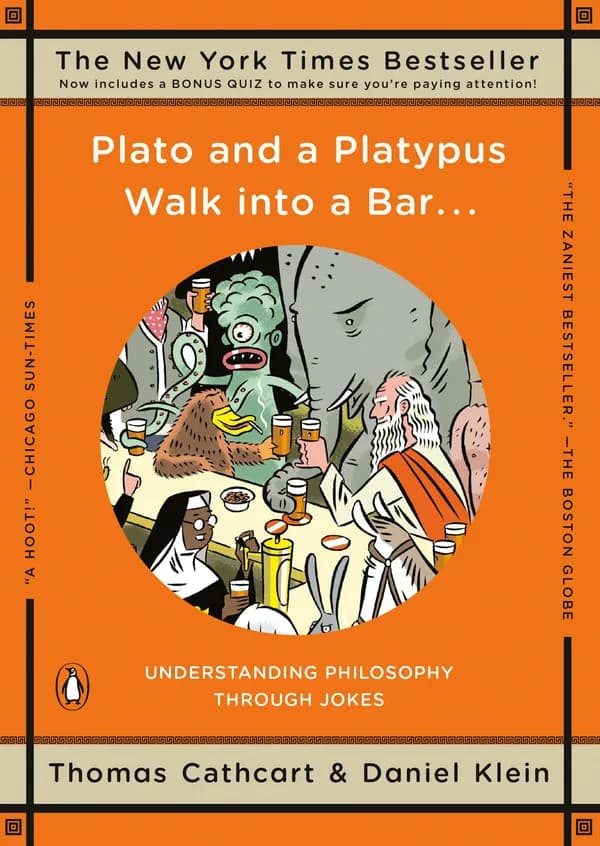
You can name a hundred reasons why "philosophy is boring": the theories are too abstruse, the names too hard to remember, the required reading never-ending tomes. But can you name a reason why "philosophy and jokes" are actually twins? *Plato and a Platypus Walk into a Bar* is the work of two not-so-disciplined Harvard philosophy graduates, Thomas Cathcart and Daniel Klein. They realised that what philosophers call an "insight" is what comedians call a "punchline twist." The book reads less like a serious textbook and more like an open-mic night at a bar, pouring ten unavoidable topics in Western philosophy — from metaphysics and logic to existentialism and meta-philosophy — into joke-shaped bottles. The structure is extremely clever: the authors know that philosophy and comedy each have their own logical systems. Through brilliant arrangement, they let you have an "aha" moment right in the middle of a laugh. This is not just a philosophy primer; it is a love letter to the power of critical thinking.
V.E. Schwab
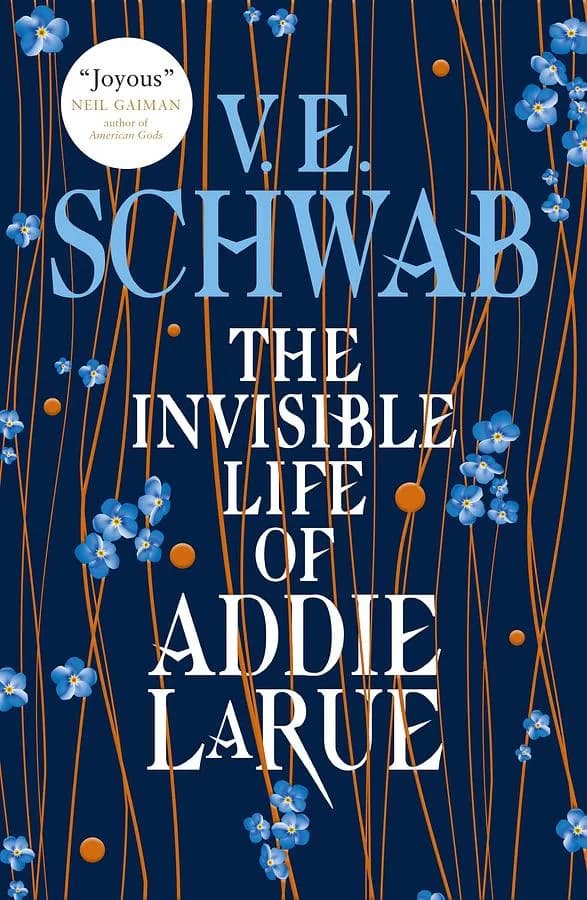
You can name a hundred reasons for wanting immortality: not wanting to age, not wanting to lose anyone, not wanting to run out of time to confess your feelings. But can you answer: "If nobody remembers you, did you ever exist at all?" *The Invisible Life of Addie LaRue* (Traditional Chinese: 《艾笛的永生契約》) opens in 1714 France, where a young woman named Addie prays to the darkness to escape an arranged marriage and receives freedom and immortality — at a crueller cost: she will be forgotten by everyone. The moment she leaves someone's sight, every trace of her is deleted from the world's database. The story pivots in a modern New York second-hand bookshop, when someone says the impossible words to her: "I remember you." The novel alternates between a modern timeline and centuries-spanning flashbacks, turning "being forgotten" into a chronic, everyday, recurring loneliness.
Greg McKeown
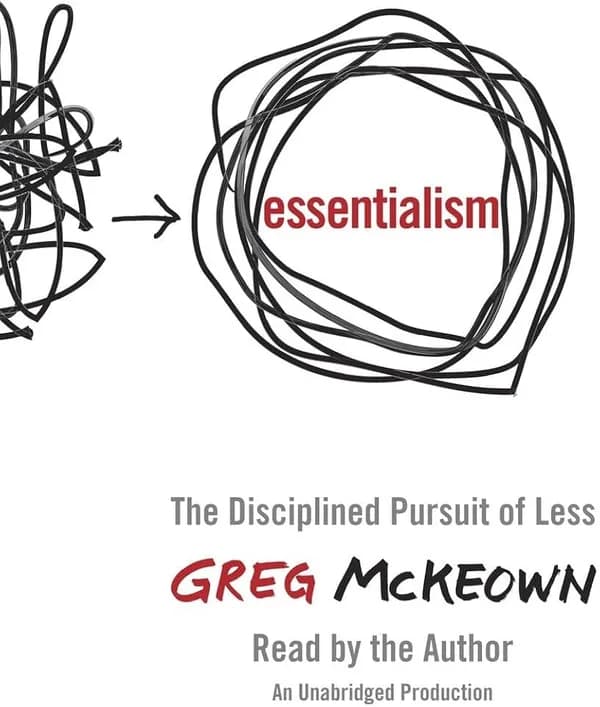
*Essentialism: The Disciplined Pursuit of Less* takes the state of being "crazy busy" apart and tells us: you are not lacking effort — you are spreading your energy across too many things that are not actually that important. Author Greg McKeown proposes "Essentialism": not doing everything, but identifying the vital few and getting better results with less input. The method is often condensed into three steps: first **Explore** (discern), then **Eliminate** (simplify), and finally **Execute** (with precision) — using discipline to reclaim your life from the noise.
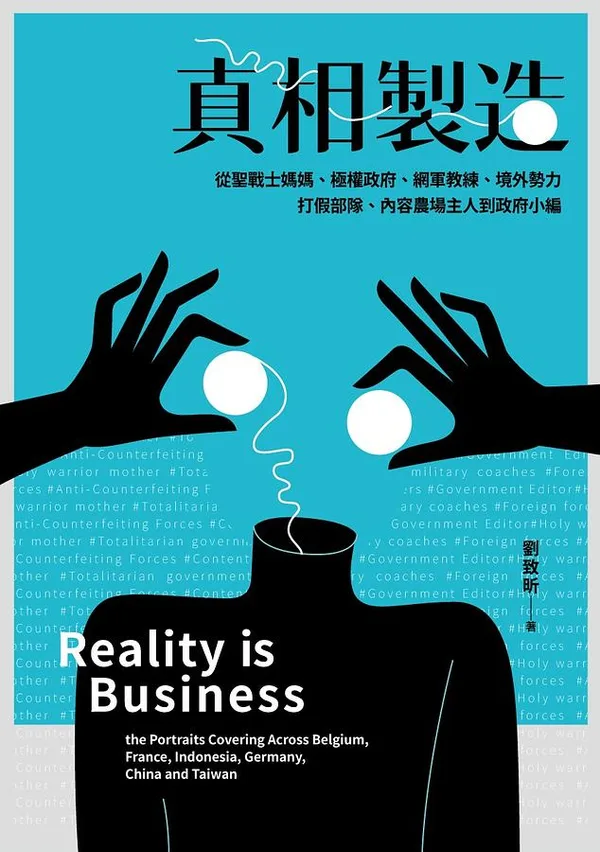
Liu Chih-Hsin
Author Liu Chih-hsin is deputy editor-in-chief at *The Reporter*, a journalist, and a podcast host. Starting from Brussels in 2016, beginning with an interview of a heartbroken but undefeated mother of a jihadist, he travels across Belgium, France, Indonesia, Germany, China, and Taiwan. What he offers is not just first-hand reporting but, most preciously, the people in each story. His pages hold no absolutely good heroes or purely evil villains: there are people consumed by their circumstances, people who rise to fight back, and people who spot an opportunity for profit and fan the flames. Living inside the vortex of the information-explosion era, the book invites us to find a Taiwanese lens through which to examine, compare, and ultimately guard against the "fake-news" wars. We appreciate how the author opens with a wide-angle view from other countries before slowly pulling the camera in, leading us from the international predicament to Taiwan's own homegrown crisis.
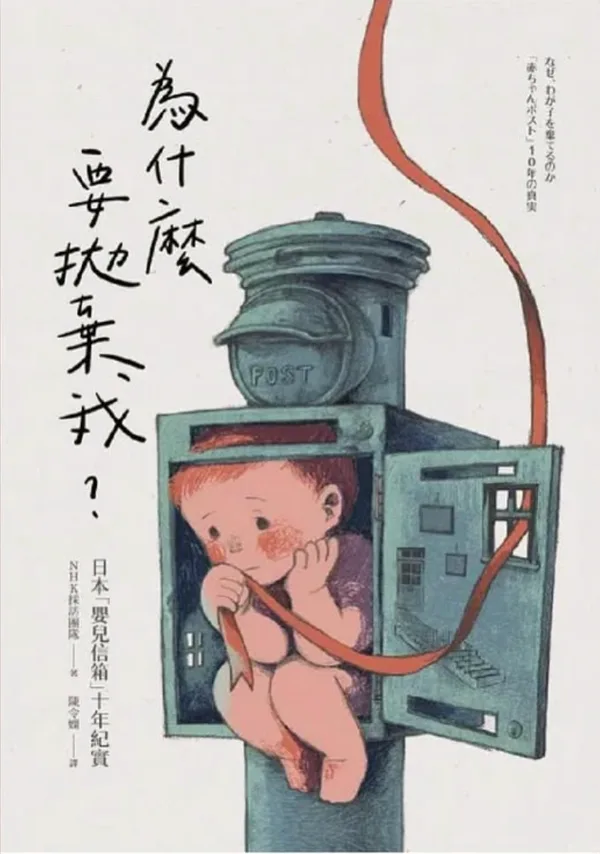
NHK Reporting Team
*Why Do They Abandon Me?* is a long-form investigation by an NHK reporting team. Its central stage is the "Stork's Cradle" (*Kōnotori no Yurikago*) installed in 2007 at Jikei Hospital in Kumamoto City — Japan's best-known, and long considered Japan's only, baby hatch. The facility's most controversial yet most critical design feature is the tightrope it walks between "a last-resort exit to save a life" and "anonymity": anonymity is what makes desperate people willing to place a child inside, giving that child a chance to survive, but anonymity also makes it far harder for the child to piece together their own origin story later in life, and society worries whether the system could be misused or even treated as a shortcut for avoiding responsibility. The book does not stop at institutional debate. It pushes the camera closer: asking "the children who were left behind" how they view the starting point of their own lives, and pressing the question of whether this facility is stopping a tragedy at the wound — or merely deferring pain.
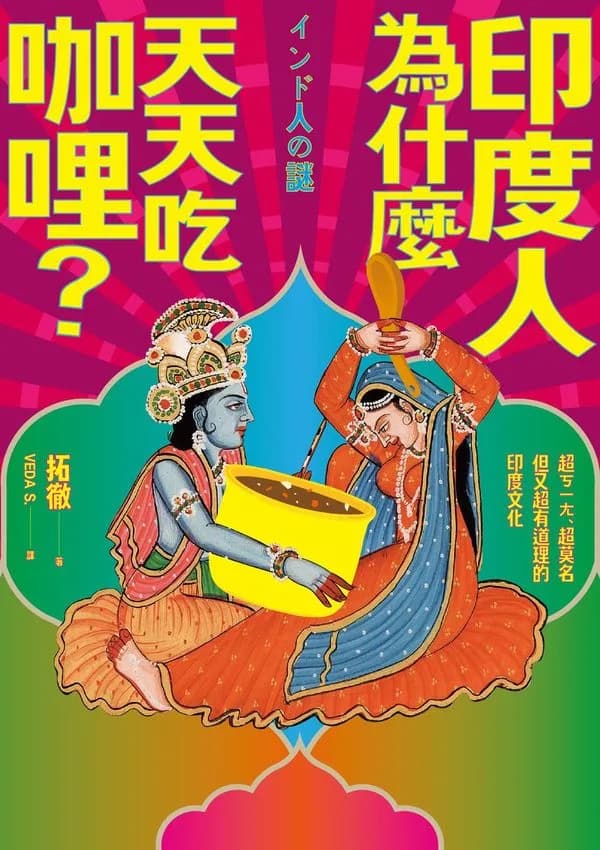
Taku Toru
*Why Do Indians Eat Curry Every Day?* is not really answering the "curry" question. Instead, it uses a string of everyday puzzles — the kind you cannot help wanting to ask but feel might be rude — to introduce how India actually works. The author is a Japanese cultural scholar who lived and studied in India for twelve years. Drawing on a sociological foundation, he unpacks each quirky question, slicing India into bite-sized "life topics": food, religion, caste, romance, slums, hygiene, language, English, identity … They look scattered, but by the end you realise they are all doing the same thing: pushing the "India myths" in our heads to the back and pulling the history and institutions that truly drive the society to the front. The book reads quickly, with a brisk pace; its aim is not exoticism but a distinctly Japanese combination of attentiveness and restraint, letting you understand differences without accidentally turning someone else's life into a joke.
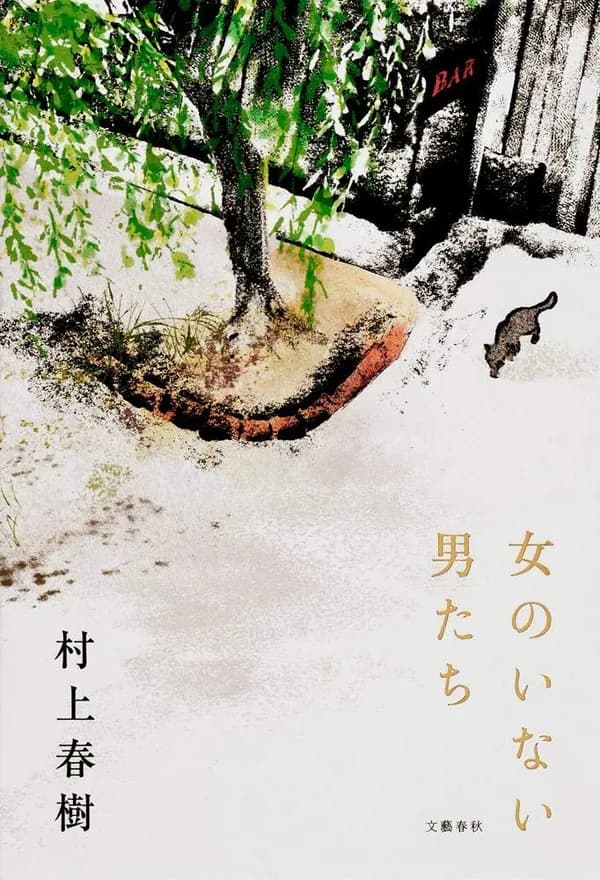
Haruki Murakami
Haruki Murakami's short-story collection, published in Japanese in 2014 and in English translation by Knopf in 2017. It contains seven stories in order: "Drive My Car," "Yesterday," "An Independent Organ," "Scheherazade," "Kino," "Samsa in Love," and "Men Without Women." Murakami himself said: "The motive for this book is just like the title *Men Without Women*. From the very first story, that phrase kept lodging itself in my head. I used it as a pillar and tried to write a series of short stories revolving around it." It turns out that one turn is all it takes to become a man without women, and there is no going back. In that singular world you will be called one of the "men without women." Becoming one is remarkably simple: love a woman deeply, and then she goes somewhere and never returns.
Keith Lowe
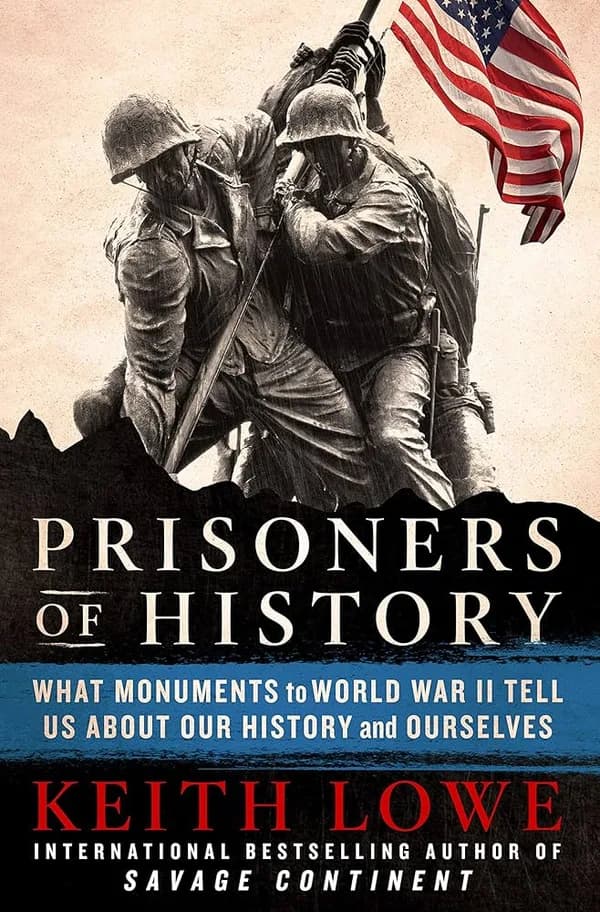
*Prisoners of History: What Monuments to World War II Tell Us About Our History and Ourselves* reads like a "travel guide to WWII memory," except it does not show you scenery — it shows you how different countries turn war into story. Author Keith Lowe visits 25 monuments and memorial sites — statues, walls, empty lots, cemeteries, museums, even a footpath — all asking the same question: when people say they are commemorating the past, are they really finding justification for today's positions, and drafting scripts for tomorrow? Sometimes we think we are looking back at history, but more often history is being used to lock us into place. A monument does not merely "remember" — it also decides who is the hero, who is the victim, who deserves sympathy, and who should stay silent. So you will see the same World War II produce solemn victory narratives in one country, abstraction in another, and deliberate silence in yet another.
Wang Li, Shen Bo-Yang
*What If China Attacks?* takes a somewhat engineering-minded approach to disassembling the invasion scenarios, military myths, and information-warfare playbooks that have circulated over the past three decades. Which ones mythologise weapons? Which ones oversimplify war? Which are narratives designed to make you panic and feel that "resistance is futile anyway"? Authors Wang Li and Shen Bo-yang focus on "building basic military literacy and the ability to identify rumours," so readers can assess reality on a more grounded scale: aggression does not happen at the push of a button, and defence does not stand on a single slogan. If you want more after finishing, there is also a follow-up edition that brings in new post-Ukraine-war contexts (such as the broader use of information warfare and grey-zone tactics).
Wang Hao
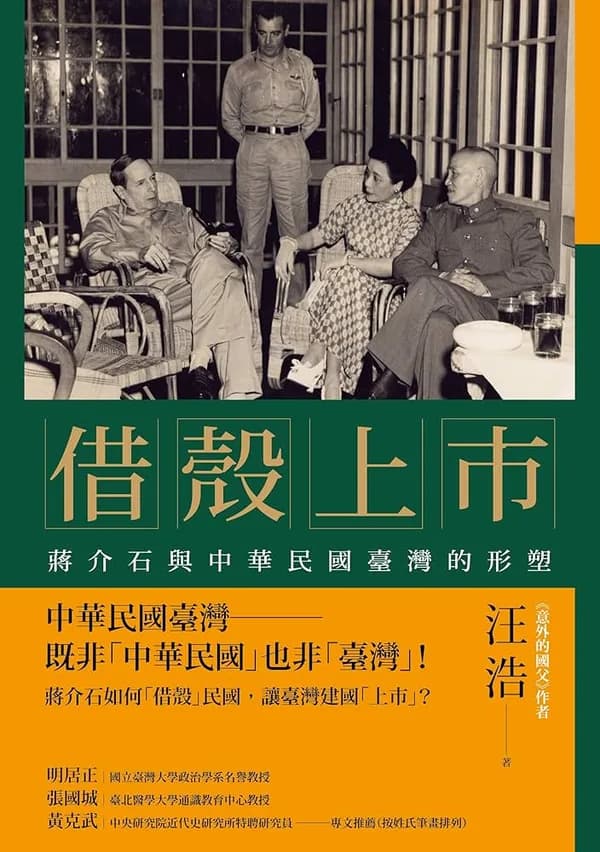
Wang Hao borrows the concept of a "reverse merger" (or "backdoor listing"): a private company injects its assets into an already-listed shell company with a low market cap, using that shell to gain listed status in one move. What he wants to say is: after the Nationalist government retreated to Taiwan in 1949, the "Republic of China" gradually became little more than a shell on the international stage. But after the Korean War broke out in 1950 and the Cold War framework took shape, Taiwan's geostrategic value, governing reality, and international positioning were all poured into that shell, forming what he calls the political reality of "Republic of China on Taiwan." This is also why Tsai Ing-wen's 2020 inaugural address used the phrase "over the past seventy years, 'the Republic of China (Taiwan)' …" to mark a redefined historical starting point. More interestingly, the author does not just argue from "viewpoints" — he backs it up with evidence: extensive use of declassified historical materials and Chiang Kai-shek's diaries, among other sources, trying to pull readers back from hindsight to see how the decision-makers judged, rationalised, and navigated between ideals and reality in real time.

Peter Christie
Have you noticed that our love for companion animals is often riddled with contradictions? We will post frantically about a lost cat, yet in the same city quietly accept that certain birds and small animals are becoming rarer. *Unnatural Companions: Rethinking Our Love of Pets in an Age of Wildlife Extinction* starts from that prickly paradox and forces us to confront an unromantic question: when "I love it so much" becomes a lifestyle, could that love also be causing harm somewhere else? Author Peter Christie is a science journalist and a dog owner. Through interviews and scientific data, he takes us on a "global tour of the pet world," putting things we normally do not want on the same table: the impact of free-roaming and stray animals on wildlife, invasive species and disease risks, the supply chain of the exotic pet market, and how the pet industry (including feed and consumer culture) has become part of the conservation crisis. The book's power is not in telling you to suddenly become "anti-pet." It is in asking you to upgrade your love to a more reality-aware version: not just hugs and healing, but also boundaries, responsibility, and whether you are willing to change a few very ordinary habits for the sake of lives you cannot see.
Nassim Nicholas Taleb
You have probably had this feeling: the harder you try to "plan life to be stable," the more it feels like it could flip at any moment. And the world loves to slip a black swan in right when you are most confident. Nassim Nicholas Taleb's *Antifragile: Things That Gain from Disorder* (2012) challenges our obsession with stability: a truly powerful system is not one that holds up without breaking — it is one that gets stronger under pressure, volatility, and chaos. He divides the world into three constitutions: - **Fragile**: fears volatility; the more it shakes, the easier it cracks (like a glass cup). - **Robust / Resilient**: can take the hit, but taking the hit is all it does (like a rubber ball). - **Antifragile**: needs a little stress to grow muscle; actually thrives the more it is shaken (like human muscles, or certain innovation systems). If you read it as an investment book, you will find the barbell strategy, risk allocation, and black-swan self-defence. If you read it as a life book, it comes down to one sentence: do not chase perfect stability — chase a structure that lets you thrive inside uncertainty.
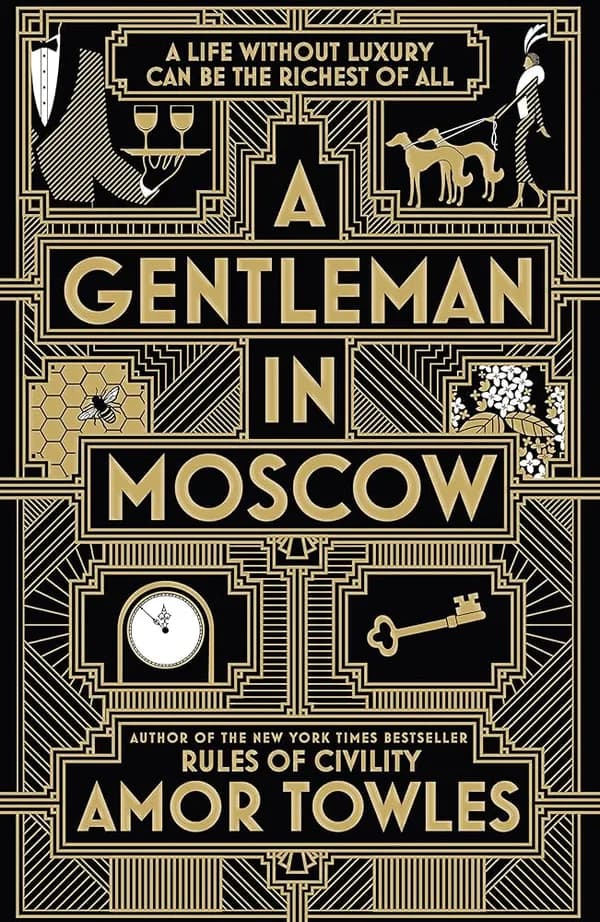
Amor Towles
If one day you were sentenced to "never leave this building for the rest of your life" — would you treat it as a prison, or find a way to live it as a city? *A Gentleman in Moscow* is Amor Towles' 2016 historical novel: in 1922, the new regime after the Russian Revolution hauls Count Alexander Rostov before a tribunal. As an aristocrat he would likely face execution, but a poem once read as "sympathetic to the revolution" saves his life, and he is sentenced instead to lifelong house arrest in Moscow's Hotel Metropol. He is moved from a grand suite to a cramped attic room; his life shrinks to a single address, yet history keeps running past the door. The hotel is no random stage. In reality the Metropol sits near Theatre Square in Moscow and was once one of the city's most lavish symbols — hot water, telephones, international cuisine, an American bar, even elevators — like a glass box locking modernity under one roof. Towles even compiled his own research notes on the Metropol, making the novel's paradox — "locked in, yet the world still spins in exquisite detail" — hold together. The novel spans over thirty years, compressing Soviet upheaval into the flow of human connections inside a single building. The Count meets actors, diplomats, officers, and all manner of staff — head chef, tailor, handyman, restaurant colleagues. Most importantly, he befriends Nina, a precocious nine-year-old girl, who years later entrusts him with her daughter Sofia, and a life forced into standstill unexpectedly grows a father-daughter bond.
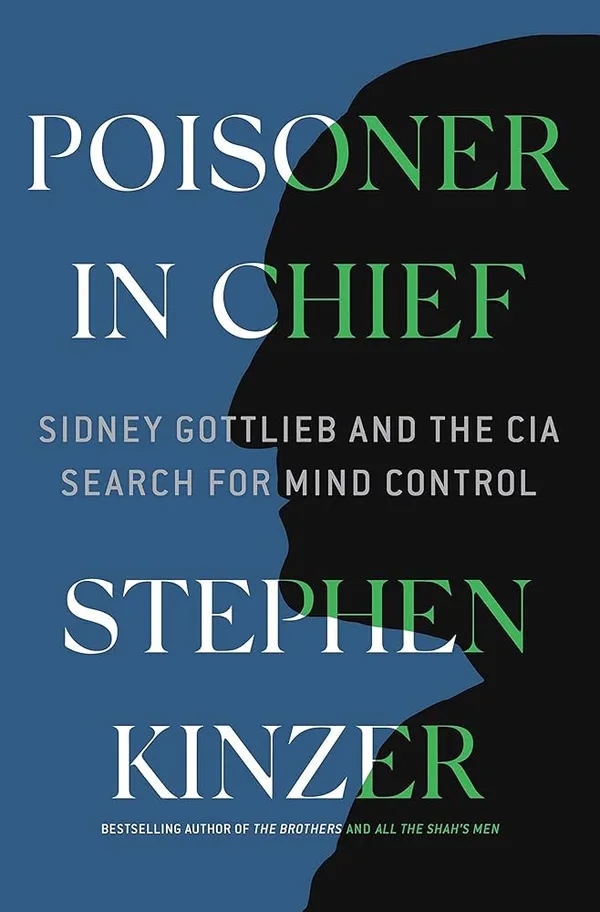
Stephen Kinzer
If someone tells you "we are at war," you instinctively feel that a lot of things can be given "special treatment." *Poisoner in Chief* is about how that "special treatment" kept sliding downhill: in the early Cold War, the United States feared the Soviet Union or China had cracked the secret of "mind control," so the CIA treated it as a technological arms race that had to be matched, launching years of mind-control research. Author Stephen Kinzer puts the spotlight on an unremarkable-looking chemist who wielded enormous power: Sidney Gottlieb. He directed MK-ULTRA and related programmes — from drugs to interrogation to all manner of "technical support" — attempting to find methods that could make people confess, lose control, or even be "rewritten." The book reads as part historical account, part dark fable: when a state escalates fear into a mission, the individual's body and will can be downgraded to raw material.
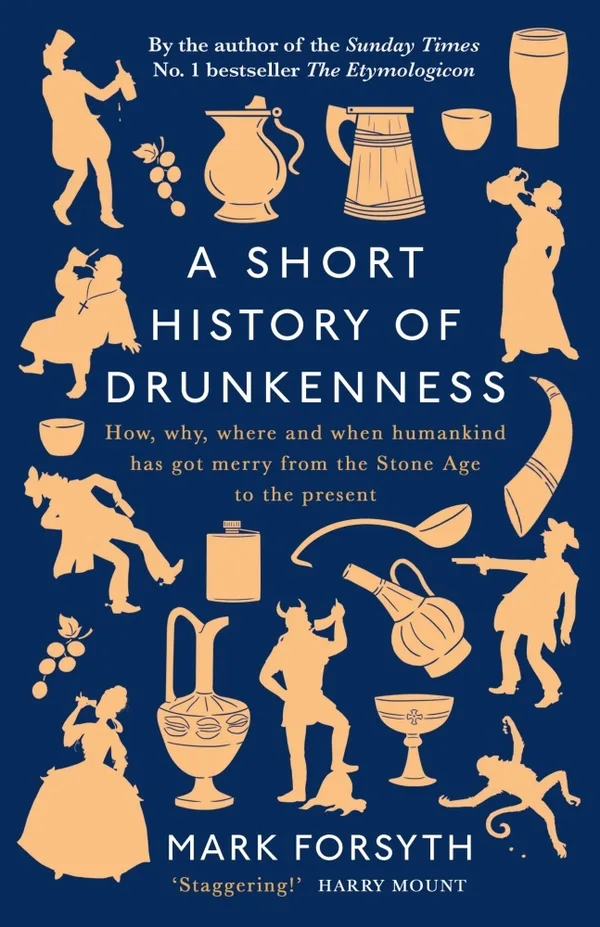
Mark Forsyth
If an alien knocked on your door and asked, "Why do the people on this planet drink until they cannot walk straight?" — you probably could not say with a straight face, "Oh, mainly to impair our reflexes so we don't get too good at table tennis." Because we all know that what intoxication really sets in motion is not just alcohol, but humanity's ancient and peculiar machinery of social life. *A Short History of Drunkenness* by British writer Mark Forsyth is a history of getting drunk — but it is neither a wine guide nor a temperance pamphlet. What the author really cares about is how different civilisations have arranged drunkenness: using it to celebrate, seal contracts, petition gods, court lovers, wage wars, or simply cage it inside a wall of rules. From prehistory to Prohibition, the book keeps asking: what did people drink, with whom, where, why they had to drink at all, and what drunkenness meant in each era. Reading it feels like joining a brilliant storyteller on a "historical pub crawl": he will not force you to a single moral conclusion, but he will make you suddenly see — what humanity invented was never just alcohol, but an entire culture of "giving drunkenness a place."
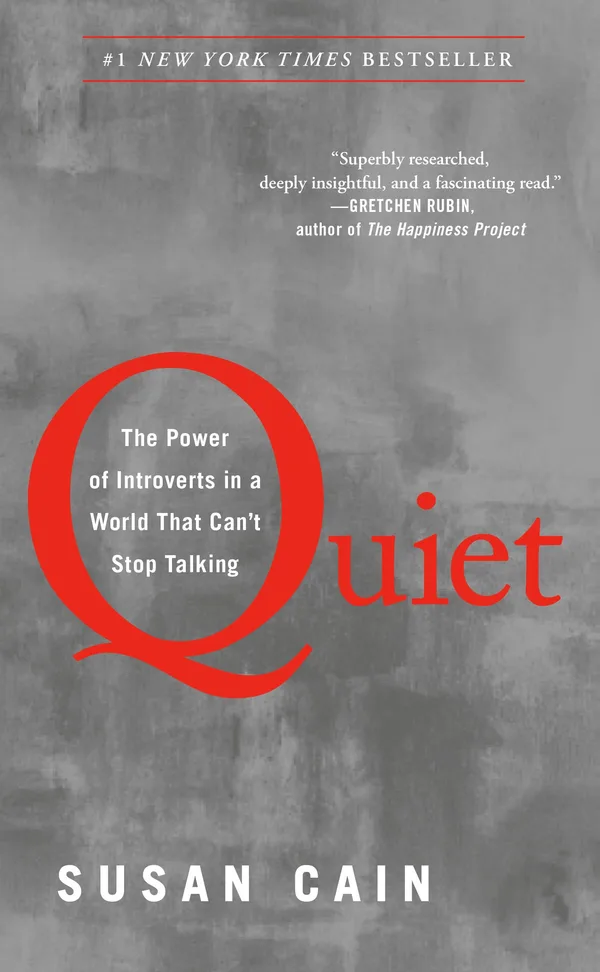
Susan Cain
If you have ever had your brain freeze at the words "let's do a quick brainstorm," or left a party feeling like a phone at 1% battery, you are probably not "bad at socialising" — you just recharge differently from the world's default setting. *Quiet: The Power of Introverts in a World That Can't Stop Talking* is Susan Cain's 2012 open love letter to "the quiet ones," and also a reminder to society at large: we are so used to worshipping the extroverted style that we have made "speaks up, takes charge, brings the energy" the default template for success — while overlooking a very different kind of power that comes from quietness. The book smartly reframes introversion and extroversion from "personality labels" back to "stimulus preferences": introverts typically prefer lower stimulation and need solitude to recharge; extroverts draw energy more easily from socialising and high stimulation. Cain also stresses that introversion is not the same as shyness — shyness is more about fear of being judged, while introversion is a configuration of energy and stimulus. Even more interesting, she pulls the lens back to cultural history: how American society shifted from a "Culture of Character" that valued discipline and integrity, to a "Culture of Personality" that rewards performance, charisma, and stage presence — making the "Extrovert Ideal" the mainstream script we chase without even realising it.

Paul Nolte
The pandemic years have been like a floodlight, exposing political questions that were always hiding in plain sight: How far can government reach? Should freedom give way to safety? How transparent does information have to be before it counts as "democratic"? And the sceptical voices have grown louder: is democracy over-romanticised? Is it really better? Or have we simply gotten used to its language? *Die 101 wichtigsten Fragen: Demokratie* reads like a checklist of democracy's essential equipment. Author Paul Nolte uses 101 questions to disassemble democracy: from "what is democracy, really" — a question that sounds simple but is the easiest to turn into a slogan — all the way to elections, media, the internet, minority rights, institutional efficiency, and future crises. The tone is not that of a lofty textbook but of a friend who keeps pressing you, forcing you to explain each concept clearly: you are welcome to be dissatisfied with democracy, but first you need to know which version of democracy, which part of the system, and which kind of failure you are dissatisfied with. The book also works well as a reading-group tool: each question acts like a small switch that, once flipped, connects to history, rights, and social structure, and ultimately forces you back into your own life experience to make a judgment. It does not aim to make you love democracy more — it aims to make you think about democracy better.
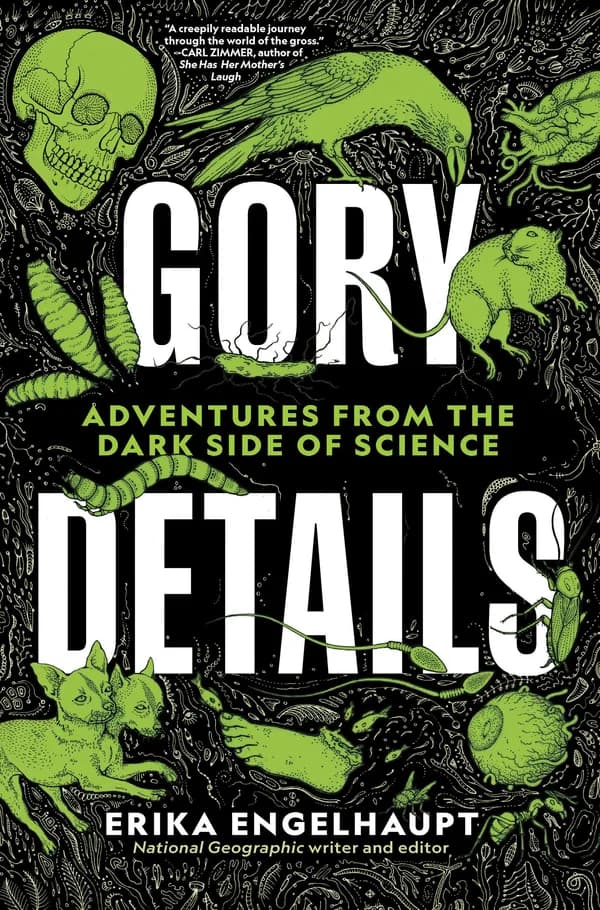
Erika Engelhaupt
Have you ever felt a contradictory kind of curiosity — you know something bloody, disgusting, or taboo is "not really something you should look at," yet your finger keeps scrolling? *Gory Details* opens a safe room for exactly that impulse. Its goal is not shock value; it is to drag the things we are too embarrassed to ask about — and too nervous to think through — under the light of science for a close-up look. Author Erika Engelhaupt is a science journalist and the writer behind National Geographic's "Gory Details" column. She covers autopsies, forensics, insects, psychology, and human taboos in a style that is both rigorous and funny, making you wince and nod at the same time — and eventually admire just how bizarre human research can get. Reading the book feels like a cross between a curiosity cabinet and a forensic crime scene. Each chapter stands on its own; you can start with the topic that scares you most and quickly discover: some things are terrifying not because they truly matter, but because we are too used to sealing them away with fear.
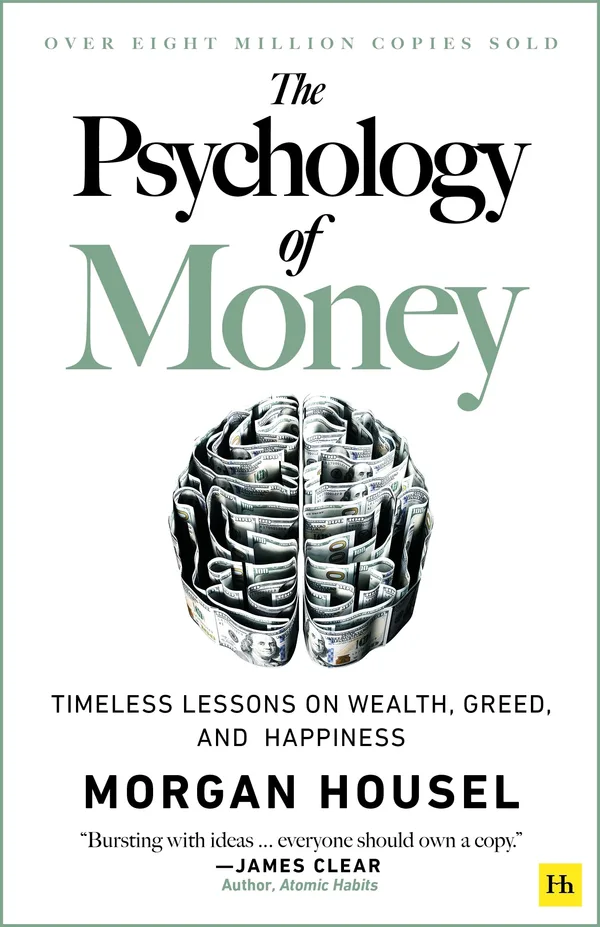
Morgan Housel
Imagine yourself carrying a Chanel bag, wearing Armani, sitting in a Ferrari. What you are probably thinking is not "I am so happy," but "will people think I am successful?" Now switch the angle: you are sitting in a café, watching a Ferrari roar past. You rarely think "that person is cool." You are more likely thinking "if I were driving that car, people would think I am cool too." That is the magic trick *The Psychology of Money* wants to expose: what we chase is often not wealth itself, but a script written for other people's eyes. Author Morgan Housel uses a series of short stories to show that the hard part of money is not "can you calculate a rate of return" — it is "how do humans make decisions." Because money decisions are never made inside a calculator. They are made at the dinner table, in the boardroom, inside your childhood memories and your self-esteem. So rather than a financial how-to, this book builds a more durable worldview about wealth.
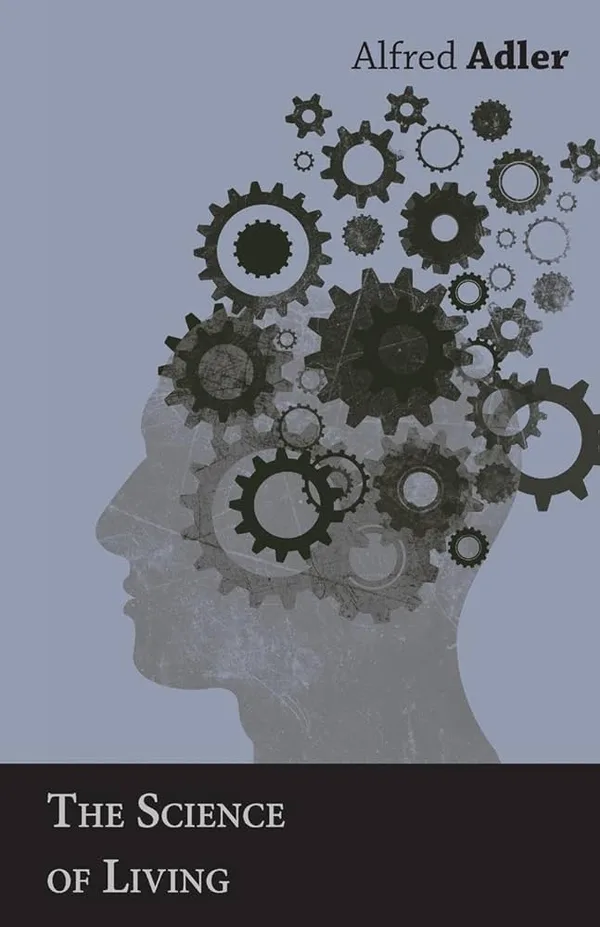
Alfred Adler
Growing up, most of us are taught to be a certain kind of person: find your talent, become better, never lose. But what if you have been trying hard all along and there is still a voice inside saying "I am not good enough"? Does that mean your life is broken? Or is that voice actually what keeps you moving? *The Science of Living* is Adler's guide for ordinary people, built around his "Individual Psychology." He cares less about what you were born with and more about how, through your experiences, you gradually developed a way of facing the world. Adler calls this your "style of life": not a personality label, but the overall roadmap of how you understand yourself, interpret others, and choose to act. The book covers a remarkably wide range — like a psychological toolkit for living: inferiority and superiority, childhood and education, family and social life, dreams (in the Adlerian sense), love and marriage, even sex and intimacy — all placed on the same map. It does not ask "what personality type are you?" It asks "what approach to life are you currently using, and is it actually helping you live well?"
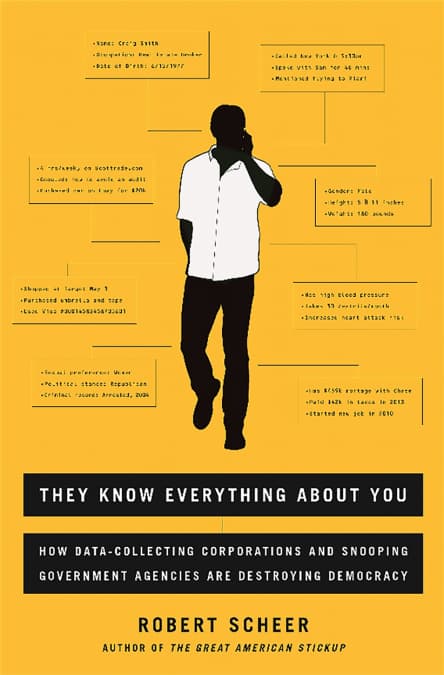
Robert Scheer
Have you ever wondered what the battlefield looks like when the government says "this is war"? Not swords, guns, or rockets aimed at the moon — but the binary world inside the cloud. Whoever controls the airspace between 0 and 1 holds the greatest power in the modern world. *They Know Everything About You* is written by veteran journalist Robert Scheer. The subtitle says it plainly: data-collecting corporations and a snooping government are steadily undermining democracy. The book reads like a user manual for the surveillance era, pulling two threads onto the same map: one is how tech companies turn our browsing, location, preferences, and social behaviour into tradeable personal profiles; the other is how governments, under the language of national security and counter-terrorism, have let surveillance expand into a norm. It is not a lifestyle guide telling you to delete all your apps. It forces you to face a harder truth: when you are recorded and profiled on an ongoing, indiscriminate basis, privacy is no longer about "whether I have secrets" — it is about "how much freedom I have left."
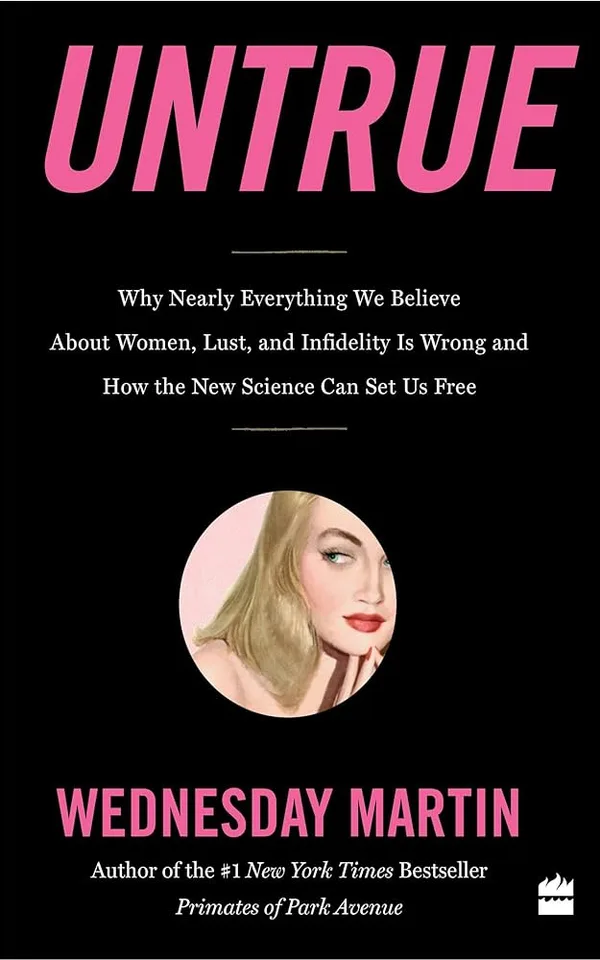
Wednesday Martin
You can rattle off a hundred social excuses for why "men cheat and that is just how it is." But can you explain why a woman who wants more sex gets labelled abnormal, too needy, or too greedy? *Untrue: Why Nearly Everything We Believe About Women, Lust, and Infidelity Is Wrong* continues Wednesday Martin's sharp, funny, barbed observations from *Primates of Park Avenue*, except this time the lens points at a much more sensitive subject: female desire, female infidelity, and the whole package of "common sense" we use to explain them away. She walks into New York sex clubs and open-relationship workshops, interviews people who have experienced female infidelity from every angle, and stacks research from primatology, cultural anthropology, psychology, sexology, and sociology onto the same table, trying to answer the questions society loves to condemn but rarely bothers to understand: What kind of woman cheats? Why does she do it? How does she see herself? The book has an ambition to reset your defaults. It is not just about sex; it is about how institutions shape the way we imagine sex, love, and loyalty. From the mythology of monogamy, to the cost of divorce, from the property logic of agricultural societies, to how modern women's economic independence changes how desire is allowed to be spoken aloud. You think it is relationship gossip, but it keeps asking: are we choosing fidelity, or are we being forced into it?
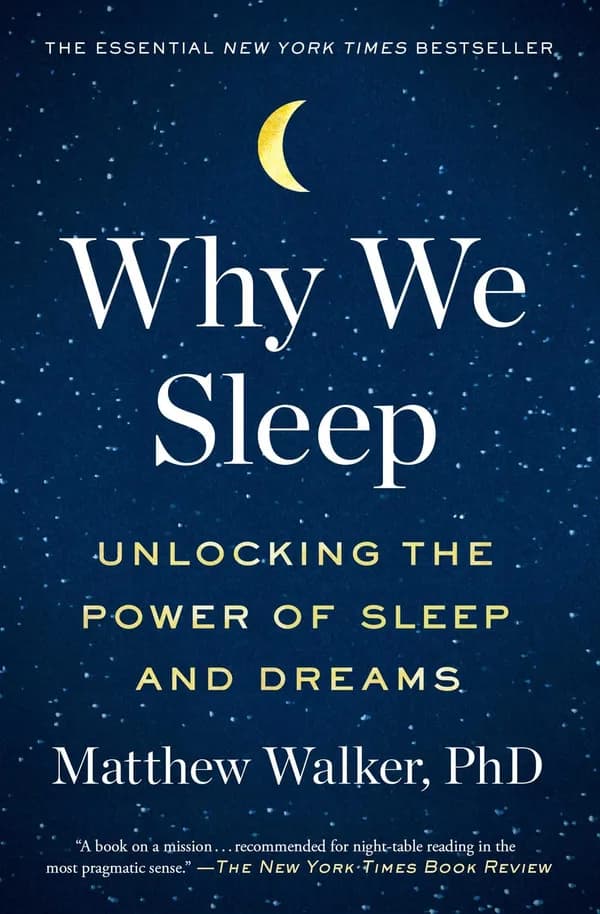
Matthew Walker
You can list a hundred reasons not to sleep: work, parties, dates, doomscrolling. But can you name a reason to sleep? *Why We Sleep* is Matthew Walker’s message to modern life: sleep is not a “nice-to-have” gap in your schedule. It is the nightly maintenance your brain and body have to run, full stop. Walker is a sleep neuroscientist and a UC Berkeley professor who studies how sleep shapes our health, memory, and the way we fall apart when we ignore it. The book feels like a full guide to sleep. It starts with how sleep actually works, how different stages rotate through the night. Then it connects sleep to learning, memory, emotions, immunity, metabolism, and heart health. After that it calls out the usual suspects in modern life: caffeine, alcohol, bright lights at night, and a daily rhythm that is constantly out of sync. And in the end, it zooms out to systems: school start times, workplace culture, medicine, and public safety. If you read it as a simple “go to bed earlier” sermon, you are underestimating it. What it really does is rethink what “being hardworking” even means.