
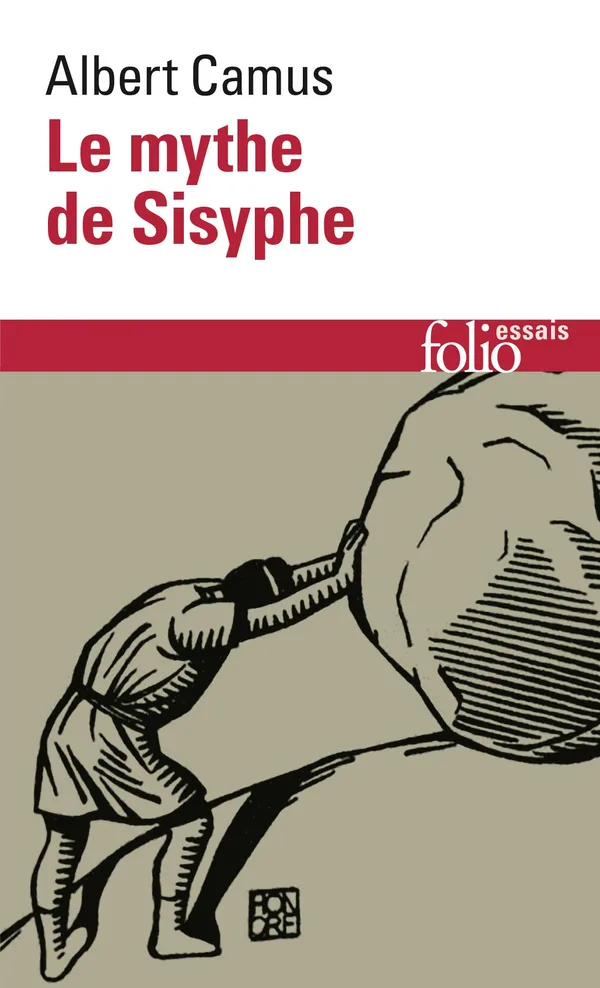
The Myth of Sisyphus
by Albert Camus
Book Club Date:April 2025
📖 Book Summary
You can name a hundred reasons why "philosophy matters": time, existence, freedom, morality, love. But Camus kicks off by flipping the table entirely: philosophy's most important question is actually—should you go on living? *The Myth of Sisyphus* (*Le Mythe de Sisyphe*) is a philosophical essay published by Albert Camus in 1942, the same year as *The Stranger*, and stands as the main stage for his "philosophy of the absurd": the world is silent, humans crave meaning, and the awkward gap where the two collide—that's the absurd. Camus doesn't sell chicken soup, nor does he offer "the ultimate answer to life." He does only one ruthless thing: forces you to look directly at "meaninglessness," then asks—are you going to run, or stay awake and remain?
✍️ Reading Notes
What makes Sisyphus terrifying isn't that his punishment is bloody—it's that it's excessively familiar. He's condemned to push a boulder to the mountaintop, only for it to roll back down every time, repeating infinitely. This isn't hell; it's the mythological version of "the daily grind": wake up, catch the subway, attend meetings, reply to messages, handle errands, collapse into bed, and do it all again tomorrow. You might even have a sudden moment where you think: what am I even doing? Sisyphus himself is actually quite the embodiment of dark humor. He was king of Corinth (Ephyra), cunning and scheming, audacious enough to trade Zeus's secrets. Legend even says he tricked Death, making it so that for a time "no one could die."—until the gods finally dealt with him using "endless futility." Camus's angle here is beautiful: what truly tortures isn't the suffering—it's the futility. When you discover the boulder you've been pushing won't leave any lasting result, you want to escape. There are many ways to escape: a leap of faith, getting wasted, stuffing your brain with work, treating life as a to-do list to blitz through, or the most extreme option—ending the game entirely. Camus calls all of these "escaping," because they share one thing in common: the refusal to look the absurd straight in the eye. But Camus's real edge isn't in denying escape; it's in proposing a more rebellious way to live: I know the world won't answer me, but I refuse to surrender either. What he wants isn't "happiness" but "lucidity." Lucid enough to know the boulder will fall, tomorrow you'll still go to work, life may have no ultimate meaning—yet you still treat every push of the boulder as your choice: today I'll eat well, love someone, watch the sea, create something, laugh a little, because I chose these things myself—the universe didn't hand them to me. So Camus's final line—"One must imagine Sisyphus happy"—isn't saying Sisyphus is a positive thinker. It's saying that once he stops expecting the mountaintop to grant him redemption, he actually reclaims his freedom. Happiness isn't "the boulder disappearing." Happiness is "I know all of this may be meaningless, yet I still refuse to hand my life over to the void."—That's not optimism; it's a kind of grace that comes from recognizing reality for what it is and still finding joy and meaning in life.
💬 Discussion Points
- 1What is the "boulder that keeps rolling back" in your life? Work, relationships, health, or some demand you place on yourself?
- 2Which method of "escape" do you find yourself using most: staying too busy to think, numbing yourself with entertainment, pushing through on sheer belief, or using "nothing matters anyway" as a shield?
- 3If "living lucidly" is itself a form of rebellion, what small act would you most want to use today to flip the world off: eating a proper meal, refusing an unnecessary act of people-pleasing, writing down what you truly want, or putting your phone down for ten minutes?