The Unconventional Museum
by Kuo Yi-Ru
Book Club Date:October 2025
📖 Book Summary
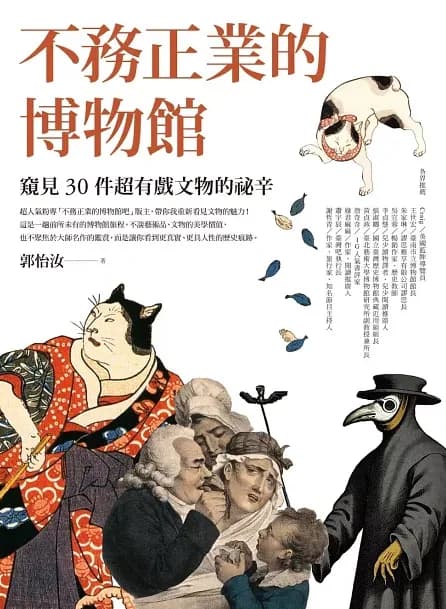
Can you explain "why Greek statues are white" or "why a dog was named 'Loot'"? *The Museum of Unorthodox Pursuits* isn't a serious art textbook but a "trivia encyclopedia" of cultural artifacts. It uncovers the misunderstood truths and forgotten gossip hiding in museums—from how a 19th-century cat-obsessed painter used felines to evade censorship, to the "commercial fraud" behind ancient Egyptian animal mummies. This book doesn't teach you how to appreciate aesthetics; through the bizarre stories behind these "antiques," it redefines our sense of distance from history, transforming cold objects into warm traces of life.
✍️ Reading Notes
If you want to learn tons of museum trivia, this is the book for you! For instance, those pristine, elegant Greco-Roman statues we take for granted are actually the result of a millennium-long beautiful misunderstanding. Using ultraviolet and laser technology, scientists discovered these sculptures were originally multicolored—even a bit "gaudy." We've enshrined the weathered remnants as the pinnacle of art, which reminds us: our notions of "standards" and "perfection" are often just biases born from incomplete information or the filters of an era. In design and life, aren't we also clinging to some "fictitious purity"? In history's shadows, objects often carry the violence of power. Against the backdrop of the 1860 Second Opium War, a Pekingese was scooped from the rubble of the Old Summer Palace, sent to England as a gift for Queen Victoria, and named "Looty." This name, blunt to the point of cruelty, encapsulates an era of plunder. When we see exquisite artifacts in museums, this little dog's story reminds us to ask: who took what from whom? The objects themselves may be silent, but their names and provenance inscribe humanity's most authentic love, hatred, and greed. One chapter is particularly fascinating: the 19th-century Japanese artist **Utagawa Kuniyoshi**, facing the strict censorship of the "Tenpō Reforms," didn't give up. Instead, he "smuggled" social observation and satire into paintings of cats. Those plump cats playing chess or munching watermelon were actually code names for freedom, evading institutional surveillance. This parallels modern internet memes—when direct expression is banned, symbols and wordplay become the most powerful weapons for conveying truth. Moreover, the "commercial fraud" mentioned in the book is timeless. Under CT scanning, many famous Egyptian animal mummies turned out to be empty inside, showing that even in antiquity's pursuit of eternal life, profit and spectacle prevailed. The Magdeburg "unicorn" fossil was actually rhinoceros and mammoth bones forcibly assembled by 18th-century scientists into a misunderstanding. These stories tell us that museums aren't just temples of truth—they're mirrors reflecting humanity's curiosity, mistakes, and mischief in exploring the world. If you're intrigued by this kind of cool trivia, you absolutely must read this book!
💬 Discussion Points
- 1The revelation that Greek statues were originally colorful completely overturns our definition of "classical simplicity." Does this make you wonder what other "sophisticated" or "aesthetic standards" in your taste are actually based on historical misunderstanding or fragmentary information?
- 2The dog "Looty"'s name marks her humble status as a "prize of war." In modern society, do we also inadvertently strip away the original meaning of a culture, species, or even individual through "naming" or "labeling"?
- 3When Utagawa Kuniyoshi smuggled social critique through cat paintings under the Tenpō Reforms' censorship, what does the vitality of this "oblique expression" inspire in you? In today's environment where digital footprints are everywhere, do you think this kind of "symbolic resistance" creativity is still effective?