
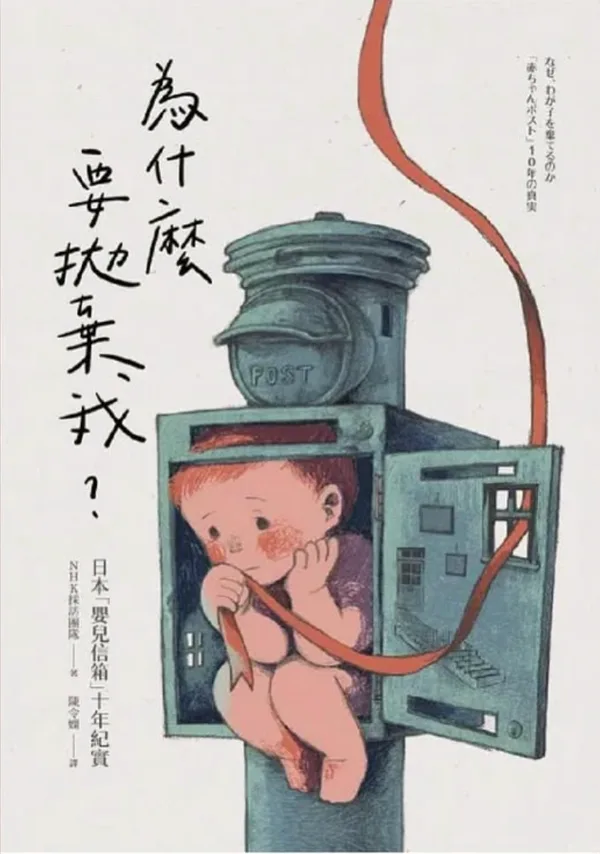
Why Abandon Me
by NHK Reporting Team
Book Club Date:August 2022
📖 Book Summary
*Why Do They Abandon Me?* is a long-form investigation by an NHK reporting team. Its central stage is the "Stork's Cradle" (*Kōnotori no Yurikago*) installed in 2007 at Jikei Hospital in Kumamoto City — Japan's best-known, and long considered Japan's only, baby hatch. The facility's most controversial yet most critical design feature is the tightrope it walks between "a last-resort exit to save a life" and "anonymity": anonymity is what makes desperate people willing to place a child inside, giving that child a chance to survive, but anonymity also makes it far harder for the child to piece together their own origin story later in life, and society worries whether the system could be misused or even treated as a shortcut for avoiding responsibility. The book does not stop at institutional debate. It pushes the camera closer: asking "the children who were left behind" how they view the starting point of their own lives, and pressing the question of whether this facility is stopping a tragedy at the wound — or merely deferring pain.
✍️ Reading Notes
This book reveals a profound contradiction: in extreme circumstances, "putting the child down" may simultaneously be an act of abandonment and the only protection the parent can offer. The baby hatch is like a society's emergency exit. Its original purpose is to reduce the likelihood of unsafe abandonment or even worse tragedies, but once the door exists, everyone must face the cost behind it: the child survives, yet often spends a much longer life asking "where did I come from, and why was I left here." This is the ethical tug-of-war that recurs wherever baby hatches or safe-haven laws are discussed around the world: on one end, the immediate right to life and harm-reduction logic; on the other, the child's right to know their identity and origin, and whether society is thereby tacitly allowing "responsibility to be outsourced to a slot in a wall." The further I read, the more I felt the real question is not a binary "should baby hatches exist or not," but whether we are willing to shift focus from moral judgement to structural reality: why did that person reach that point, why was she afraid to seek help, did she even know help was available, and did she trust that seeking help would not get her torn apart by society? NHK's reporting perspective carries an important reminder: the hospital tries to persuade parents to leave at least basic information so the child will have a chance at answers someday, while simultaneously maintaining enough anonymity and safety — because the moment the entrance feels "unsafe," those babies may never appear at the door at all. Within Kumamoto City's verification process and annual reports, you can also see the awkwardness of "operating inside the cracks of the existing system": it is not as simple as "abandonment equals total impunity." It is more like a grey lifeline forced open at the intersection of law, social welfare, medicine, and ethics. For example, the 2023 report recorded nine cases that year, categorised as "not clearly determined to be illegal" — reflecting the facility's long-standing complexity in institutional positioning.
💬 Discussion Points
- 1If we think of the baby hatch as "society's tourniquet," then we must ask: a tourniquet can save a life, but are we willing to treat the actual wound?
- 2When we criticise anonymity for potentially harming a child's right to know their origins, what is the alternative? If there is no pathway to help that is safe enough and free enough of shame, will "unwanted pregnancies" simply disappear — or just move to darker, more silent corners?