
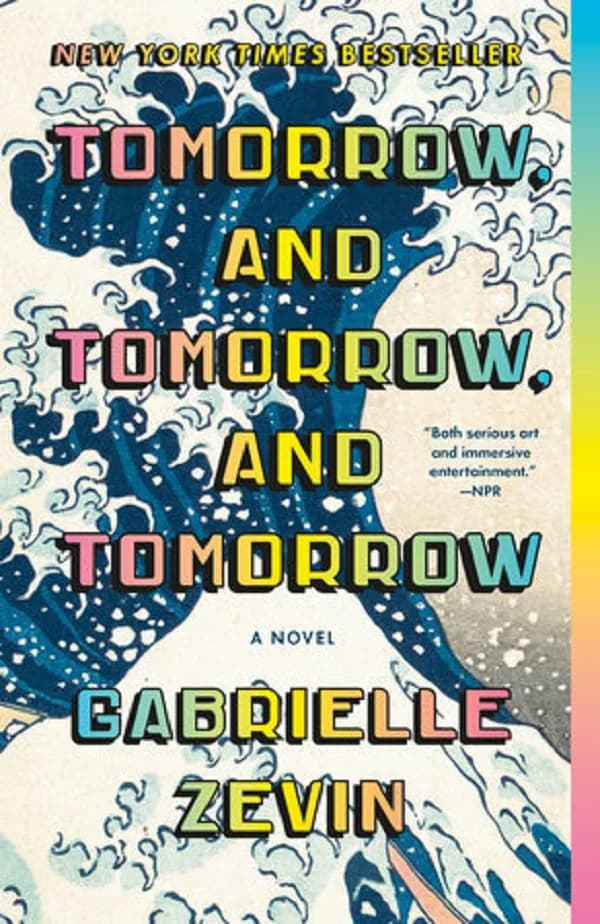
Tomorrow, and Tomorrow, and Tomorrow
by Gabrielle Zevin
Book Club Date:January 2025
📖 Book Summary
*Tomorrow, and Tomorrow, and Tomorrow* is the magnum opus of American author Gabrielle Zevin. The story follows two video game prodigies, Sam and Sadie, from their first meeting in a Boston children's hospital to co-developing a world-shaking game, spanning thirty years of emotional entanglement. This is not merely an industry drama about game development—it's a profound exploration of disability, identity, and how two lonely souls find redemption through "creation." The book's structure resembles the level design of a grand video game, transforming the most pessimistic line from Shakespeare's *Macbeth* into the gaming logic of "infinite lives." Though the title is drawn from tragedy, it conceals an entirely different life energy. This book redefines what you may have dismissed as "wasting time" on games, recasting them as the highest art form capable of mending reality's shortcomings and conveying complex emotions.
✍️ Reading Notes
The book's most captivating intellectual thread is its reinterpretation of "tomorrow." In Shakespeare's pen, "tomorrow, and tomorrow, and tomorrow" is the futile march of life toward death; but in the gaming world of Sam and Sadie, "tomorrow" represents "Reset." Games grant humans a power never available in real life—if you fail, you can try again, as long as you have the courage to press Start. This challenge to fatalism allows characters living in pain or with disabilities to find freedom of action and resilience in the virtual world. However, behind the creative game industry lurks a brutal glass ceiling of gender. Sadie, a genius developer, is perpetually overshadowed by Sam's spotlight, reduced by the media to "Sam's collaborator." This phenomenon is painfully real: the game industry has long been male-dominated, and female professionals often face their talent being questioned, their work being objectified, or a lack of diversity. Even though the proportion of female gamers has increased dramatically, the power imbalance on the creative side remains an invisible shackle that Sadie and countless real-world women must fight to break. This book also elevates the discussion of "games as art." Sadie and Sam's creations aren't just profit-driven—they're vehicles for conveying profound social issues and emotions. Through delicate prose, the author tells us that game designers are like directors or writers, weaving personal experiences into code so that players can inhabit different roles and situations through interaction. This immersive experience makes video games perhaps the most powerful medium for conveying complex emotions (such as the grief of losing a loved one or the challenges of living with a disability). Through this thirty-year journey, we witness friendship warping and transcending under enormous pressure. As the book says: "Life is like a game, full of unknowns"—but precisely because we can keep saying "tomorrow, and tomorrow, and tomorrow," we have the chance to meet a better version of ourselves at the next level.
💬 Discussion Points
- 1Shakespeare sees "tomorrow" as dust marching toward silence, while gamers see "tomorrow" as a chance to start over. If you could have a "Save Point" in real life, at which moment would you choose to restart? Would this make your decisions more reckless, or give you more courage to take risks?
- 2The gender discrimination Sadie faces in the book reflects the real glass ceiling in the gaming industry. When women are reduced to a man's "collaborator" or "appendage," do you think the loss is merely a matter of reputation? How does this gender inequality limit the diversity of games as an art form?
- 3Sam and Sadie's relationship isn't traditional romantic love but a more complex "creative partnership." Do you think the bond created by building something together (like co-directing, co-founding a business, or co-designing)—could it be deeper, and also more dangerous, than physical or emotional love?