
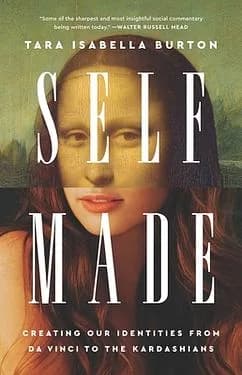
Self Made
by Tara Isabella Burton
Book Club Date:January 2026
📖 Book Summary
We can all recite the slogans of "being yourself": be authentic, be real, don't conform, live your personal brand. But "being yourself is actually a job"—you need positioning, you need to maintain consistent character, you need continuous output, and you need to make sure you don't crash. *The History of Persona: From Da Vinci to the Kardashians* doesn't teach you how to run your Instagram. Instead, it flips the question: why do we believe "self-fashioning" can turn us into our own gods? The author uses a long lens to pull "persona" back into historical context—from Renaissance self-performance all the way to the reality TV and social media era—tracing how "displaying the self" became a basic modern survival skill.
✍️ Reading Notes
This book upgrades "persona" from a gossip buzzword to a structural issue: persona isn't just your personal little stage—it's an entire era's collective religion. You increasingly live like a "product" that can be searched, tracked, and converted into trust and money, and you're supposed to look like you're doing it voluntarily. The author isn't writing about "humans suddenly becoming flashy" but about how "self-fashioning" in the modern West was step by step legitimized, elevated, and finally commercialized. Today, social media has pushed this path to the extreme: creators are no longer just creators—they are the brand itself. You're not selling your work; you're selling the credibility, narrative appeal, and projectability of "me as a person." The paradox is that self-fashioning is simultaneously liberation and a new cage. It gives some people the chance to escape the constraints of birth, class, and gender, to re-craft their life narrative—but it also turns "success" into a moral exam: if you're not famous, not loved, not influential enough, it's often read as "you're not trying hard enough, not authentic enough, not savvy enough at self-management." In other words, structural problems get packaged as personal responsibility. The book mentions a key sentence: many personas work because their owners are very good at "faking it till they make it." This isn't saying everyone is deceiving others; it's saying that modern "authenticity" often isn't "who I am in private" but "can I consistently present a version of myself that others find believable." You perform repeatedly, speak repeatedly, get feedback repeatedly, and eventually you yourself get shaped by that version. So reading *The History of Persona* is ultimately like looking in a mirror: you start distinguishing which parts are the person you genuinely want to become, and which are the "likable version" you've been maintaining long-term to avoid elimination, to avoid awkwardness, to avoid losing the stage. This book reminds us: persona can be a tool, but don't let it become your prison.
💬 Discussion Points
- 1Does "being yourself" feel more like freedom to you, or more like a KPI? Must you be clearly positioned, recognizable, and constantly producing output?
- 2In your "persona," which part do you actually enjoy for the protection and benefits it brings? And which part have you maintained to the point of exhaustion?
- 3If "fake it till you make it" really works, what worries you more: that you'll shape yourself into a freer person, or that you'll shape yourself into someone who's better at pleasing the world?