
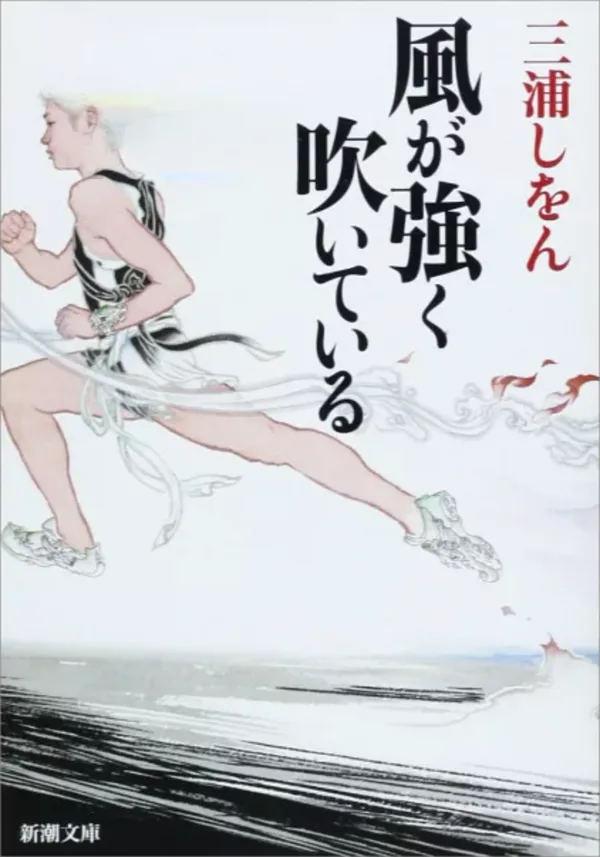
Run with the Wind
by Miura Shion
Book Club Date:September 2025
📖 Book Summary
*Run with the Wind* is Shion Miura's signature work set against the backdrop of the Hakone Ekiden relay marathon. Published in Japanese by Shinchosha in 2006, the story revolves around two college students—Kiyose Haiji and Kurahara Kakeru—and their dilapidated apartment building "Chikusei-sō." Haiji stubbornly cobbles together nine tenants with zero athletic credentials into a ten-person team with one goal: to stand on the starting line of the Hakone Ekiden. If you think this is about "who runs fastest," the book will prove you wrong. There's a line in the synopsis I love: long-distance running isn't about speed—it's about what you carry in your heart. It's about running, but it reads more like a treatise on: how do we give ourselves over to a group of people and trust that "without me it won't work, and without you it won't work either"?
✍️ Reading Notes
What makes *Run with the Wind* remarkable is how unromantically it portrays "dreams." Dreams here aren't slogans on posters—they're a form of annoying daily management: run every day, train, get yelled at, get injured, grind against each other, and face the most humiliating moments: you're trying your hardest, but you're still the underdog school, still treated like roadside weeds by the powerhouses. But Haiji refuses to let anyone use "it's impossible anyway" as an excuse. His cult-leader-like charisma (I mean this as a compliment) lies in the fact that he doesn't rush to tell you "you're strong"—he only forces you to admit one thing: you actually want to become a more complete person too. So the misfits of Chikusei-sō are forced to grow second lives: one person lives for their body for the first time, another runs for someone else for the first time, another learns for the first time to actually finish today instead of slacking off. Running becomes their shared language—like forcibly editing everyone's previously scattered life rhythms into the same song. This is also why the "Hakone Ekiden" in the book isn't just a backdrop but a moral exam. The spirit of ekiden isn't individual heroism but the moment you hand off the relay sash: you transfer all your limits, mistakes, and effort into the next runner's hands. What I love about this book's tenderness is that it has boundaries. It won't tell you "if you work hard you'll succeed." It's more like saying: you might work hard and still not win the championship, but working hard will suddenly give your life things it didn't have before—like being someone others can rely on, and being able to rely on others. You might even start to understand that "strength" isn't speed but whether, when you're in pain, scared, and embarrassed, you can still keep yourself in the team. And "strong wind" is actually a very precise metaphor: the wind won't stop just because you want to win, and the road won't flatten just because you're trying hard. The only thing you can do is adjust your posture, minimize resistance, preserve your breath, and keep moving forward. This lack of romance is, paradoxically, its most romantic quality.
💬 Discussion Points
- 1Is there a "relay sash" you've been holding in your life all along: a responsibility, a dream, a family, a promise? Who do you most want to hand it to, or run alongside?
- 2Are you more like Haiji (the person who drags everyone into the dream), or Kakeru (someone who runs fast but doesn't want anyone getting close)? Do you think what you need right now is teammates, or space?
- 3If "strength" isn't speed but "what you carry in your heart," what's in your heart right now: saving face, a sense of security, freedom, achievement, or a particular person?